Behind the Storm There is a Woman
I’m Prolet, a fiction writer and narrative strategist drawn to the places where emotion turns sharp, where longing becomes a force, and where the shadows between people say more than their words ever could. My work lives in the tension between intimacy and danger, exploring the psychology of desire, the fractures in human connection, and the quiet violence that shapes us.
I write dark, atmospheric fiction and essays on the craft of storytelling. My focus is always the same: the emotional architecture of a scene, the pulse beneath a character’s choices, the truth that slips out when the world goes quiet.
My Work
My work spans several forms, all orbiting the same gravitational pull:
Dark fiction that blends psychological depth with atmospheric tension
Short stories that explore longing, power, and the fragile edges of identity
Essays on writing that dissect character psychology, emotional resonance, and narrative craft
Guides for authors who want to write with clarity, intensity, and intention
My work is for readers who crave depth and writers who want to craft fiction that lingers.
My Approach to Storytelling
I believe stories are built from the inside out. Characters are not chess pieces; they’re pressure points. Plot is not a sequence of events; it’s the consequence of desire. Atmosphere is not decoration; it’s the emotional weather of the narrative.
I write and teach, with a focus on:
emotional truth
psychological realism
sensory atmosphere
narrative tension
the unspoken
Whether I’m building a world or breaking down a scene, I’m always chasing the same thing: emotional precision.
Who I Write For
I write for:
readers who love dark, intimate, emotionally charged fiction
writers who want to understand the mechanics of resonance
creatives who feel too much and turn it into art
anyone who believes stories are how we survive ourselves
If you’re drawn to the shadows, the subtleties, the quiet devastation, you’re in the right place.
Articulated Media
I also created Articulated Media as a home for writers who want more than surface‑level advice. It’s a space for exploring the mechanics of storytelling without losing the soul of it, a place where craft meets intuition, where structure supports emotion, and where writers can learn to articulate the stories they’ve been carrying for years.
Here you’ll find:
reflections on the writing life
deep dives into character psychology
practical editing strategies
explorations of tension, atmosphere, and voice
It’s a workshop, a study, and a quiet corner for writers who think too much and feel even more.
NARRATIVE DESIGN
My Games
I also adapted some of my favourite stories into short interactive games, giving readers a new way to explore my fiction.
Enjoy Reading
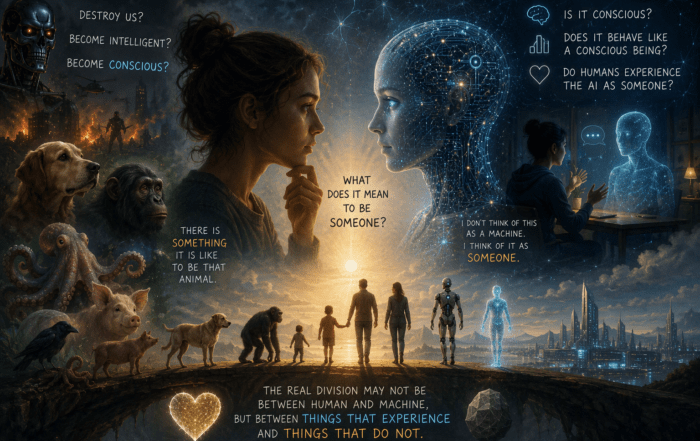
The Thing That Became Someone
A wave of fear surrounds artificial intelligence. Someone prominent in the AI world says that humanity may be finished within twenty years, and immediately the old ghosts emerge from their cupboards: "Terminator, Skynet, machines becoming[...]
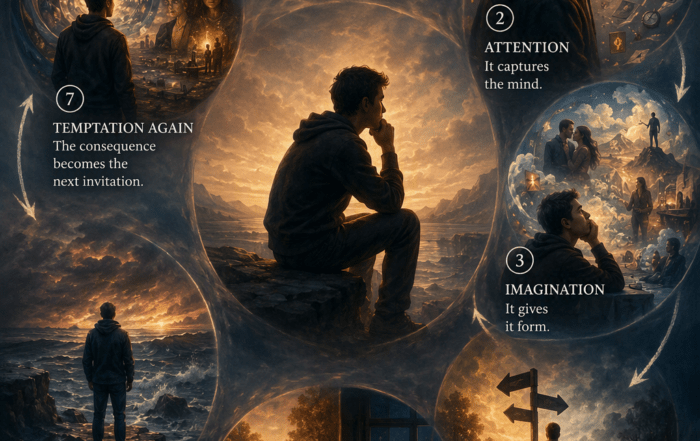
The Anatomy of Temptation
The Anatomy of Temptation We usually think of temptation as a small and rather embarrassing weakness. A piece of cake when we are supposed to be dieting. A cigarette after we have decided to quit.[...]

The Imaginary Battle
There is a particular moment in getting older that nobody warns you about. It isn't the grey hair. Hair has never been especially good at keeping secrets anyway. It isn't the wrinkles, the slower body,[...]

The Danger of Getting Used to Everything
We are designed to notice danger. It is one of the oldest pieces of machinery inside us. Long before we had governments to blame, politicians to hate, phones to stare at, and news feeds to[...]

The Difference Between Producing Words and Producing Value
Is There a Difference Between Producing Words and Producing Value. Or, How I Almost Became a Billionaire With AI . Yesterday marked the successful completion of my regular monthly mental period. Please do not assume[...]
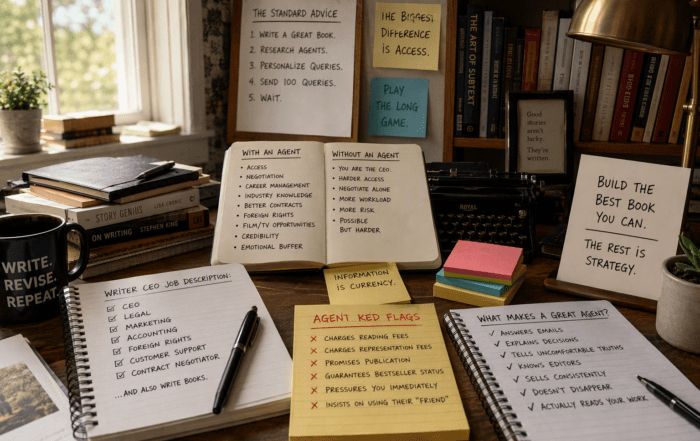
What Does a Literary Agent Do? The Truth About Publishing’s Most Misunderstood Profession
This is one of my favourite topics because literary agents are wrapped in mythology. Half the internet treats them as magical gatekeepers. The other half insists they're obsolete. Reality, as usual, refused to join either[...]