Here is the uncomfortable truth that people keep circling without wanting to land.
Stories are not “made up.”
They are leaked.
They escape through authors the way steam escapes a cracked pipe. Sometimes violently. Sometimes, with such politeness, you almost miss the damage.
People like to imagine writers as magicians. We sit down, summon dragons, invent cities, pull a plot out of thin air, and voilà. Creativity as a party trick. As entertainment. As a skill, you can learn in six steps and monetise by Thursday.
That fantasy is soothing. It keeps the reader safe.
The reality is messier, quieter, and far more intrusive.
Authors do not invent stories from nothing. We metabolise life. We digest it badly. Then we excrete narratives in self-defence.
The Myth of Pure Imagination
There is a persistent belief that “real” imagination means total originality. That if a story resembles the author’s life, it must be lazy, narcissistic, or somehow less impressive. As if borrowing from experience is cheating. As if the highest form of creativity is amnesia.
This belief collapses the moment you actually look at how the mind works.
The brain does not generate content in a vacuum. It rearranges. It distorts. It exaggerates. It compresses. It blends memory, fear, desire, observation, and half-remembered conversations overheard on public transport. Even the wildest fantasy is stitched together from familiar textures.
You cannot imagine a colour you have never seen.
You cannot invent an emotion you have never brushed against.
You cannot write a convincing human reaction without having felt something adjacent to it.
So, when people ask, “Is every story a reflection of the author’s life?” the honest answer is irritatingly nuanced.
Yes.
No.
And you’re asking the wrong question.
Lived Experience Is Raw Material, Not Blueprint
A story is not a diary with better lighting.
When an author writes about grief, it does not mean they are transcribing a specific funeral. When they write about betrayal, it does not mean they are naming names. When they write about obsession, power, love, violence, or devotion, it does not mean a one-to-one confession is taking place.
What is happening is this: an internal experience is being translated into narrative form.
Experience enters the body first. It lodges somewhere inconvenient. It becomes tension, residue, pressure. Writing is one of the ways to apply structure to that pressure, so it doesn’t rupture something vital.
An author might never have murdered anyone, but they have felt rage.
They might never have lived in a dystopia, but they have felt surveillance.
They might never have lost their memory, but they have felt dislocation from the self.
Stories are not factual mirrors. They are emotional equations.
Life gives you variables. Writing solves for meaning.
Why Fiction Feels More Honest Than Memoir
Here’s the paradox that confuses people.
Fiction often tells the truth more accurately than nonfiction.
Memoir is constrained by facts, chronology, and self-censorship. Fiction has no such obligations. It can bend time. Merge people. Heighten stakes. Strip away polite explanations and leave only the emotional skeleton.
When authors claim, “This didn’t happen to me,” they are often telling the truth in the most literal sense. But emotionally, psychologically, symbolically, something very close did.
Fiction allows the author to say:
This is what it felt like.
This is what I couldn’t say out loud.
This is what I noticed but never admitted.
This is the shape of the wound, not the event that caused it.
Readers sense this honesty instinctively. That’s why a made-up story can feel intimate in a way a factual account sometimes doesn’t. Fiction removes the alibi of reality and forces the truth to stand on its own.
Observation Is Experience Too
Another quiet misconception: that only dramatic lives produce good stories.
False. Deeply, lazily false.
Writers are often not living louder lives than anyone else. They are simply paying attention with fewer filters. Watching how people hesitate before speaking. Noticing which jokes land and which ones leave a bruise. Tracking the subtle negotiations of power in a room.
Observation is participation delayed.
An author might write convincingly about a marriage without being married. Or about parenthood without having children. Or about exile without ever leaving their country. What they are drawing from is not biography but pattern recognition.
Humans repeat themselves with astonishing consistency. Change the names, swap the furniture, adjust the century. The emotional choreography remains eerily intact.
Writers watch. They store. They recombine.
The Alchemy of Distance
Experience alone does not make a story. Distance does.
A moment must cool before it becomes usable. Raw pain is rarely articulate. Raw joy is rarely precise. Writing requires a certain estrangement from the event. Enough space to see shape, rhythm, causality.
This is why people often write about childhood decades later. Or about love only after it has ended. Or about trauma once it has stopped screaming quite so loudly.
Distance turns chaos into form.
The story is not the experience. It is the residue after reflection, distortion, and deliberate selection. What gets included matters less than what gets excluded. The act of choosing what to omit is where authorship actually lives.
Are Authors Just Writing Themselves Over and Over?
Sometimes. And sometimes that’s the point.
Every author has obsessions. Themes that recur like a nervous tic. Certain questions they cannot stop asking. Certain dynamics they keep re-enacting with new costumes.
This is not failure. It is a signature.
You can change the setting, the genre, the plot mechanics, but the underlying inquiry remains stubbornly consistent. Power. Belonging. Control. Freedom. Love. Memory. Fear. Identity. Loss.
These themes are not chosen. They choose the author.
The mistake is assuming repetition equals limitation. In reality, repetition is excavation. Each story digs at the same site from a different angle, hoping this time the answer might shift.
The Personal Is Inevitable. The Autobiographical Is Optional.
Every story passes through a human nervous system. That alone makes it personal.
But personal does not mean literal.
An author’s fears, biases, longings, blind spots, and contradictions will bleed into the work whether invited or not. Even attempts at detachment reveal something. Especially attempts at detachment.
What matters is not whether a story reflects the author’s life, but how consciously that reflection is shaped. An unexamined autobiography can be indulgent. Transformed experience becomes art.
The difference is intention.
Why Readers Want This Question Answered
There is a reason readers keep asking whether stories are “true.”
They are searching for permission. Or reassurance. Or a map.
If the story is autobiographical, then maybe suffering has meaning.
If the author survived, maybe the reader will too.
If it’s all invented, then perhaps pain is optional.
This question is less about authors and more about the reader’s hunger to locate themselves inside the narrative. To understand whether stories are escape hatches or mirrors.
The answer, inconveniently, is both.
Stories as Emotional Prosthetics
Stories do something life rarely does: they impose coherence.
Life is chaotic, unresolved, and allergic to closure. Stories take that mess and offer temporary scaffolding. They allow us to rehearse outcomes, test identities, and explore consequences without paying the full price.
Authors create these simulations using the only tools available: memory, observation, imagination, and a nervous system shaped by lived experience.
You cannot remove the author from the story any more than you can remove gravity from falling.
So Where Do Stories Come From?
They come from friction.
Between who we are and who we pretend to be.
Between what happened and what should have happened.
Between what we felt and what we were allowed to express.
Between what we remember and what we suspect we’ve forgotten.
Stories are the byproduct of trying to reconcile these tensions.
Some are gentle. Some are grotesque. Some are elaborate disguises. Some are blunt confessions wearing fictional coats.
None are accidental.
The Final Annoying Truth
Every story is a reflection of life, but not necessarily the author’s biography.
It reflects how it feels to be human in a particular body, at a particular time, with a particular set of wounds and wonders. It reflects what the author noticed, what they feared, what they loved too much, what they avoided naming.
Fiction is not a lie.
It is a different measurement system for truth.
Authors do not invent stories the way architects design buildings from blueprints. We assemble them the way archaeologists reconstruct creatures from fragments. A bone here. A shadow there. A guess informed by obsession.
The result is not reality.
It is something more dangerous and more useful.
Meaning.
You might want to read more about:
Dark Flash Fiction: Structure, Rhythm & Impact
Atmospheric & Mythic Fiction: An Essential Guide to Liminal Storytelling
If these words stayed with you, share them.
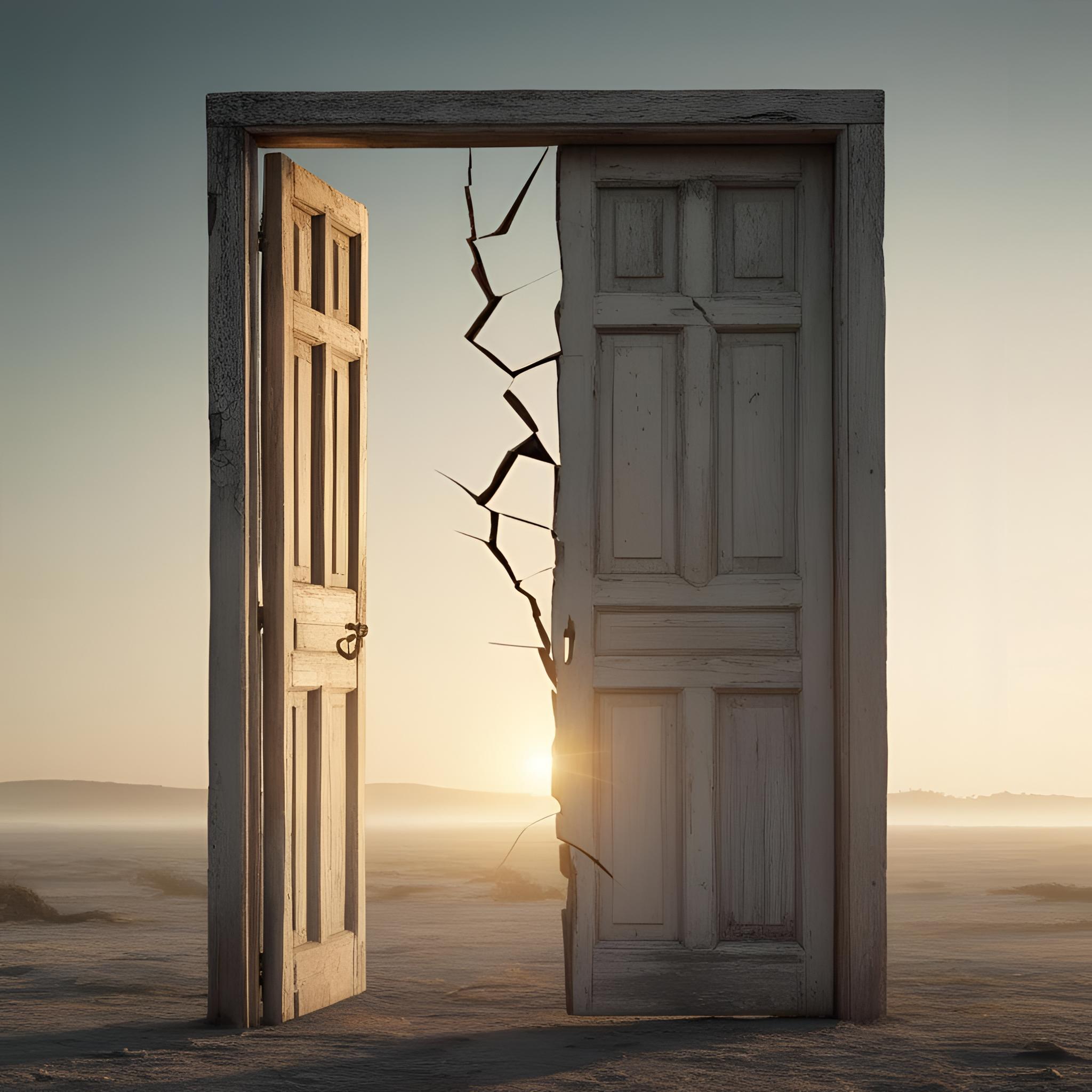
Disclaimer: Featured image generated with AI.
A quiet chamber behind the visible world.
We value your trust!
Your address is safe in the vault.
We’ll only use it to send you letters worth opening; no spells, no spam, no secret salesmen.