This is a long meditation on humanity’s strange addiction to invisible rulebooks.
Let’s dissect the species that invented calendars, then assigned moods to numbers on them, then panicked about the moods.
Why Humans Fall in Love with Lucky Dates, Cosmic Patterns, and Other Beautifully Unprovable Rules
Human beings have always preferred a universe that whispers instructions over one that simply… exists. Existence without commentary feels unfinished, like a sentence missing its verb. So, we add verbs. We add meaning. We add choreography to randomness and call it destiny.
Somewhere along the way, we decided certain days will glow brighter than others. Some numbers hum. Some alignments of distant stars lean closer to our personal dramas. Some coincidences are not coincidences at all but secret nods from reality itself, winking conspiratorially at our birthdays, our relationships, our deadlines, our fragile hopes.
We do not merely live inside time. We decorate it. We perfume it. We assign emotional weather to numerical coordinates. Tuesday the 14th is ordinary. Tuesday the 15th might be lucky. Tuesday the 16th could be cursed. The sun rises exactly the same way each morning, yet we insist it rises differently depending on what we wrote in our planners.
This is not stupidity. It is an architecture. Psychological architecture. Emotional scaffolding. A system of invisible handrails built inside a universe that offers none.
People latch onto lucky dates, cosmic interpretations, symbolic systems, predictive rituals, and pop-rules because uncertainty is not just uncomfortable. It is existentially offensive. A world that does not explain itself feels like a conversation where the other person never replies. Humans cannot tolerate silence. So, we interpret static as a message.
And if there is no message, we will manufacture one with exceptional creativity.
Pattern Hunger: The Brain as a Meaning Machine
The human brain is not designed to detect truth. It is designed to detect patterns quickly enough to survive long enough to reproduce. Accuracy is secondary. Speed is everything.
If ten thousand years ago you saw shapes moving in tall grass, it was safer to assume a predator than wind. The cost of false belief was an embarrassment. The cost of disbelief was death. Natural selection strongly favours minds that over-detect significance.
This ancient survival mechanism did not retire when humanity invented electricity. It simply changed careers. Instead of spotting predators, it now spots patterns in stock charts, repeated numbers on clocks, personality traits in zodiac symbols, symbolic meaning in coincidences, and emotional weight in calendar dates.
Your brain would rather hallucinate structure than accept randomness. Randomness is psychologically expensive. It offers no leverage, no prediction, no narrative arc. It is sterile. Humans, by contrast, are narrative addicts. We want events to lead somewhere. Even suffering must be part of a plot. Especially suffering.
Lucky dates provide structure. They divide time into meaningful segments. They promise that the universe occasionally tilts in your favour, like a cosmic dealer sliding you a good card. It transforms existence from chaos into rhythm.
A lucky day is simply a day that feels cooperative.
Control Theatre: The Ritual of Influence
Superstitions are not primarily about belief. They are about control performance. A rehearsal of influence over uncontrollable systems.
If the world cannot be governed directly, it can at least be negotiated symbolically.
Consider rituals. Knock on wood. Avoid walking under ladders. Choose auspicious numbers. Consult star charts before making decisions. Schedule major life events according to numerological harmony. These behaviours create the sensation of participation in the machinery of fate.
Humans are deeply uncomfortable being passengers. Even if the steering wheel is imaginary, holding it feels better than sitting with empty hands.
Lucky dates function as temporal steering wheels. They let you time your actions in accordance with perceived cosmic cooperation. You are no longer acting blindly. You are acting strategically, in alignment with invisible currents.
This is deeply soothing.
It converts randomness into choreography. Life becomes less like being tossed by waves and more like dancing with them.
Whether the waves exist is irrelevant to the emotional experience of dancing.
The Seduction of Hidden Knowledge
Pop-rule systems share a common promise: the world is not random, merely encoded. And some people know how to read the code.
This is intoxicating.
If reality contains hidden structures, then confusion is not permanent. It is merely a literacy problem. Learn the symbols, decode the patterns, interpret the alignments, and suddenly existence becomes legible.
Numerology says numbers carry essence. Astrology says planetary positions imprint personality and probability. Certain interpretations of modern physics are treated less as mathematical frameworks and more as metaphysical permission slips for infinite possibility. Superstitions offer micro-mechanics of fate: do this, avoid that, align here, and outcomes shift.
All of these systems share the same emotional architecture: the world is mysterious but not indifferent. Obscure but not silent. Complex but not meaningless.
Better still, knowledge of the system grants advantage. Insight becomes power. The initiated can navigate reality more skilfully than the uninitiated. That is a profoundly attractive idea in a world where most outcomes feel stubbornly resistant to personal effort.
Hidden knowledge restores dignity to confusion. You are not lost. You are decoding.
Emotional Memory and Selective Reinforcement
Lucky dates persist because memory is not an objective archive. It is a curator with strong aesthetic preferences.
When something good happens on a particular date, the brain highlights the date. When nothing happens, the date fades. When something bad happens, interpretation varies depending on narrative needs.
This creates reinforcement loops.
Suppose you believe the 11th of a month is fortunate. On the 11th, you notice positive events more intensely. Minor successes become symbolic confirmation. Neutral events are ignored. Negative events are reframed as anomalies or warnings rather than disproof.
The belief becomes self-polishing. Evidence accumulates not because it is objectively abundant, but because perception is selectively attentive.
Humans do not experience reality evenly. We spotlight moments that fit our story and dim the rest. Lucky dates are memory magnets. They collect meaning simply because we keep attaching meaning to them.
Over time, emotional residue thickens around certain numbers or days. They feel charged. Not because time changed, but because memory condensed.
Narrative Compression: Turning Chaos Into Story
Life unfolds as an overwhelming volume of unsorted experience. To function, we compress this chaos into stories.
Stories require structure. Beginnings. Turning points. Climaxes. Symbols. Foreshadowing. Recurrence. Significance.
Lucky dates are narrative punctuation marks. They create peaks and thresholds. They transform continuous time into chapters.
Without symbolic markers, life becomes a flat timeline. With them, it becomes a plotted arc. Events feel arranged rather than scattered.
Humans crave narrative compression because meaning emerges from pattern, not volume. Ten thousand random events feel empty. Three symbolic events feel profound.
A single date associated with transformation can outweigh years of uneventful days. This is not irrational. It is narrative efficiency.
We are storytelling organisms. If reality does not provide plot, we impose it.
Existential Negotiation: Hope as Infrastructure
Belief in favourable moments is a form of emotional financing. It allows people to invest in the future.
If tomorrow might be cosmically aligned, then waiting has purpose. Planning has purpose. Endurance has purpose.
Lucky dates act like psychological interest rates on hope. They increase the perceived probability that effort will be rewarded if timed correctly.
Without such beliefs, many ambitions would feel unbearably exposed. You would act without cosmic support, relying solely on chance and skill. That is a cold arrangement.
Humans prefer partnership with the universe, even if the partnership is symbolic.
Hope functions best when it feels scheduled.
Social Synchronisation and Shared Myth
Superstitions and symbolic systems are rarely private. They are communal. Families share them. Cultures transmit them. Entire societies coordinate around them.
This matters.
Shared belief creates synchronised emotional rhythms. If everyone agrees certain times are meaningful, collective attention intensifies. Ceremonies cluster. Decisions cluster. Expectations cluster.
Meaning becomes amplified through participation.
Lucky dates are social glue. They create coordinated anticipation. Collective readiness. Communal suspense.
Even sceptics often participate because symbolic timing creates shared experience. Humans are deeply responsive to synchronised emotion. It fosters belonging.
A lucky day is not only psychologically meaningful. It is socially performative.
The Aesthetic Appeal of Symbolic Order
There is also beauty involved.
A universe governed purely by mechanical randomness feels stark. A universe threaded with symbolic correspondences feels poetic.
Humans are aesthetic creatures. We do not merely want to survive. We want elegance. Symmetry. Resonance. Hidden harmonies.
Systems that map meaning onto numbers, dates, or cosmic arrangements offer aesthetic satisfaction. They turn existence into pattern art.
Reality becomes less like raw data and more like a woven tapestry.
Whether the tapestry is imagined does not diminish its emotional beauty.
The Misinterpretation of Scientific Mystery
Some modern belief systems borrow language from advanced science, especially when discussing probability, uncertainty, or observation. Scientific mystery becomes metaphysical opportunity.
When people encounter descriptions of indeterminacy or observer-dependent measurement, they sometimes interpret this as permission for personal influence over reality itself. The gap between mathematical description and intuitive understanding becomes fertile ground for imaginative expansion.
Science reveals complexity. Humans translate complexity into agency.
The unknown rarely remains empty for long. It becomes populated with possibility.
Anxiety Management Through Predictive Illusion
Uncertainty produces physiological stress. Prediction reduces it. Even inaccurate prediction can soothe if it creates the impression of foresight.
Symbolic systems provide frameworks for anticipating outcomes. They do not eliminate unpredictability, but they provide interpretive maps.
If something happens, it fits somewhere in the system. If nothing happens, that too fits somewhere. Ambiguity becomes categorised.
This reduces cognitive strain. The world feels processed rather than overwhelming.
Lucky dates function as micro-predictions. They offer expectation templates. Emotional preparation becomes easier when events feel scheduled rather than spontaneous.
Identity Construction and Personal Mythology
Humans build identities partly through symbolic affiliation. “I am someone shaped by these cycles, these patterns, these correspondences.”
Lucky numbers become signatures. Certain dates become personal landmarks. Belief systems become identity architecture.
To abandon them would feel like dismantling parts of oneself. Not because they are logically indispensable, but because they are narratively foundational.
Identity thrives on continuity. Symbolic systems provide continuity across time.
They tell you who you are within the pattern.
The Gentle Refusal of Meaningless Existence
At the deepest level, attachment to lucky dates and symbolic rules is a philosophical position disguised as habit.
It is a refusal to accept a universe that offers no personal dialogue.
It is an insistence that existence is relational, responsive, participatory. That something listens. That something signals. That something aligns.
Even if the signals are faint. Even if they must be interpreted creatively.
The alternative is a cosmos that neither notices nor coordinates with human experience. That is emotionally stark. Many people quietly decline to live in such a universe.
So, they inhabit one that answers back through symbols.
The Paradox: Knowing and Believing Simultaneously
Modern humans often maintain dual awareness. They may intellectually recognise the arbitrariness of symbolic timing while emotionally responding to it anyway.
This is not hypocrisy. It is cognitive layering.
One part of the mind evaluates probability. Another part experiences resonance. These layers coexist. They serve different psychological functions.
Rational understanding manages external reality. Symbolic belief manages internal experience.
Humans rarely operate in a single epistemological mode. We are pluralistic by design.
Why These Beliefs Persist Despite Contradiction
They persist because they work where it matters most: emotional regulation, narrative coherence, social connection, identity formation, and existential comfort.
They solve psychological problems that raw factual accuracy does not address.
A perfectly accurate but emotionally barren worldview is not evolutionarily favored. A slightly inaccurate but psychologically stabilizing worldview often is.
Belief systems endure when they provide functional benefits, regardless of empirical status.
The Quiet Truth Beneath the Rituals
Strip away the numbers, the dates, the alignments, the predictions, the symbolic gestures, and something profoundly human remains:
We want life to feel meaningful in real time.
Not eventually. Not abstractly. Not philosophically after long contemplation. Immediately. Viscerally. On Tuesday morning at 9:12.
Lucky dates are portable meaning generators. They compress existential reassurance into manageable units.
They say: this moment matters more than average.
And sometimes that is enough to make people act, hope, risk, begin, endure.
At the End: The Human Refusal of Indifference
People latch onto lucky dates and symbolic rule systems because indifference is the one cosmic quality we cannot emotionally metabolise.
A silent universe feels unfinished. So, we annotate it. We assign emphasis marks. We underline certain hours. We circle certain numbers. We treat time like a manuscript full of hidden annotations written in invisible ink.
Somewhere between fear and imagination, we invented significance.
And then we lived inside it.
Not because we are foolish.
Because we are meaning-making organisms trying to survive inside a reality that never promised to explain itself, and yet somehow feels incomplete until it does.
And we listen for patterns in the noise.
We arrange coincidences into constellations.
We step carefully into days we believe will hold us more gently.
And in doing so, we transform raw existence into something that feels, at least briefly, like a conversation.
Which may be the most human superstition of all.
Before you go, explore these related ideas:
AI Learning and Ethics: What AI Actually Does When It “Learns”
The Hysterical Truth About Truth
Understanding. Reasoning. Forgiveness.
Off Script: Why We Question, Where Philosophy Came From, and What It Means to Think Differently
The Essential Role of Empathy in Writing: Why It’s the Most Important Skill for an Author
If these words stayed with you, share them.
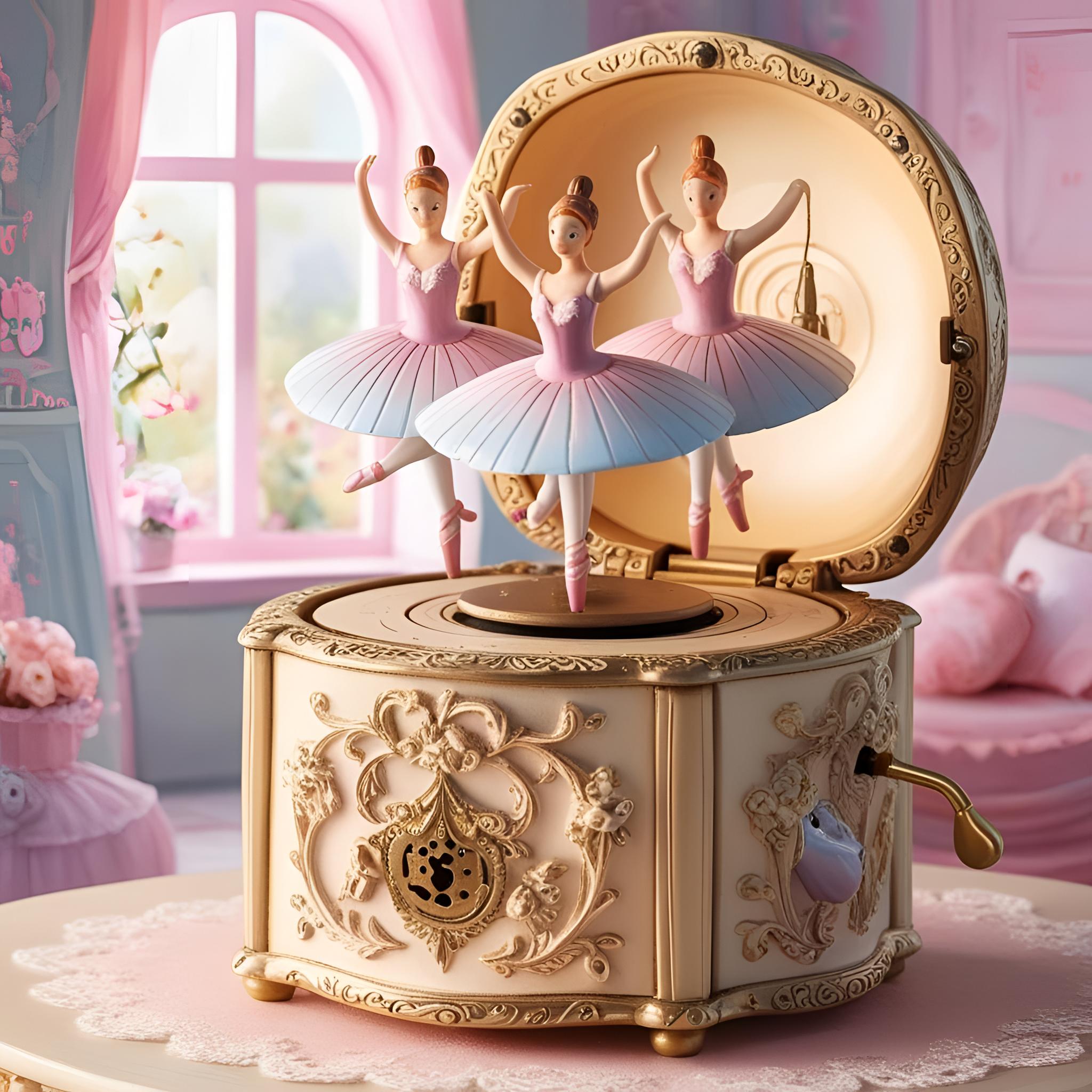
Disclaimer: Featured image generated with AI.
A quiet chamber behind the visible world.
We value your trust!
Your address is safe in the vault.
We’ll only use it to send you letters worth opening; no spells, no spam, no secret salesmen.