Hope is a peculiar kind of cruelty. It arrives dressed as a gift, speaks in the voice of love, and leaves you holding the bill.
It is probably the worst of all the beautiful feelings we have invented to make life bearable. We call it a virtue. We teach children to keep it alive. We tell the broken to hold on to it, the disappointed to find it again, and the dying to never lose it. We have built entire philosophies around this little emotional parasite, as if giving a feeling a noble name could turn it into a reliable source of information.
Hope is not a fact. It is a wish wearing the clothes of a possibility.
And we are remarkably good at confusing the two.
We hope people will change. We hope they will finally understand what they have done. We hope that one day they will wake up, look at the wreckage they have left behind, and experience a miraculous transformation of character. We hope that age will make them wiser, suffering will make them kinder, and the years will somehow accomplish what their own conscience has failed to do.
We hope because the alternative is to look at reality and admit that we have spent years investing our hearts in something that was never going to happen.
That admission is expensive. It costs us memories, loyalty, time, and sometimes the entire version of ourselves we built around another person.
So we negotiate with the truth.
Perhaps they didn’t mean it.
Perhaps they were going through something.
Perhaps they will understand one day.
Perhaps, now that they are older, they will finally know better.
Perhaps.
What a magnificent little word. It can keep a person emotionally homeless for decades.
Hope doesn’t need evidence. It feeds on imagination, rearranges memories, and turns isolated moments of tenderness into proof of a transformation that has never actually occurred. One kind gesture becomes a promise. One apology becomes a new beginning. One peaceful afternoon erases a thousand miserable mornings.
We don’t see what is happening. We see what we want to happen, then persuade ourselves that the two are almost the same.
They are not.
Reality has the indecency to remain reality, regardless of how desperately we wish to negotiate with it.
And nowhere is this more destructive than in our relationships with people who hurt us.
We are willing to forgive almost anything when we believe the future might redeem the past. We give people another chance, then another, then another, until the chances become a subscription service to our own disappointment. We call it patience. We call it compassion. We call it love.
Sometimes it is love.
Sometimes it is simply our refusal to accept that we have misunderstood someone.
Because there is a particular kind of pain in discovering that the person we loved was not the person we believed them to be. It is easier to imagine that they are temporarily lost, wounded, confused, or waiting for the right moment to become someone better.
It is easier to hope for a different person than to accept the one standing in front of us.
And so we remain.
Not because we are happy. Not because the evidence is encouraging. Not even because we genuinely believe in what we see.
We remain because of what we imagine.
We become loyal to a future that exists nowhere except inside our heads.
Hope can make us betray our own intelligence in the name of our own feelings.
We can be perfectly capable of recognizing a pattern in business, politics, history, and human behaviour, yet become spectacularly blind when the pattern belongs to someone we love. We can explain to a stranger exactly why a situation is hopeless, then spend another ten years waiting for our own situation to improve.
We are not necessarily stupid. We are emotionally invested.
And emotional investment has a remarkable talent for making stupidity look noble.
But there is something else we must understand, something far less comforting than the idea that everyone can change.
A bad person does not automatically become a good person by growing old.
Time passes. Hair turns grey. Faces acquire lines. Bodies become fragile. The world starts calling us respectable simply because we have been around long enough to accumulate birthdays.
But age is not a moral achievement.
A person can live for eighty years without ever developing a conscience worth mentioning. They can survive disappointments without learning empathy, experience suffering without becoming compassionate, and grow old without ever questioning the damage they inflict on others.
Some people become wiser with age. Others merely become older versions of themselves, with better excuses, more elaborate justifications, and decades of practice in making their behaviour look reasonable.
Time does not purify character. It reveals it, sometimes slowly, sometimes with breathtaking clarity.
A cruel person may become too weak to express cruelty in the ways they once did. A manipulative person may lose the power to control everyone around them. Someone who once dominated a family may eventually depend on that same family for help.
But a loss of power is not the same as a change of heart.
Silence is not remorse. Helplessness is not kindness. Dependence is not repentance.
And old age is not an apology.
We often confuse the disappearance of harmful behaviour with the disappearance of the desire behind it. We assume that because someone can no longer do what they used to do, they must have become someone else.
Perhaps they have.
But perhaps circumstances have simply taken away their tools.
There is a difference, and it matters.
Of course, people can change. Human beings are not sentenced to remain who they were yesterday. Genuine change exists, and it deserves recognition when it happens.
But genuine change is not a birthday present delivered by the universe. It requires recognition, responsibility, effort, and a willingness to confront the self without immediately inventing excuses for it.
It shows up in behaviour. In accountability. In consistency. In what a person does when there is nothing to gain from doing the right thing.
Not in our wishes.
Not in our interpretations.
And certainly not in the number of years someone has spent on this planet.
We should stop treating the possibility of change as evidence that change has occurred.
These are two entirely different things.
Hope becomes dangerous when we use it to overrule what experience has already taught us. When we excuse the tenth repetition of a behaviour because we are waiting for the eleventh to be different. When we turn someone else’s potential into our personal obligation to endure them.
There is no moral medal for suffering long enough.
You do not prove that you are loving by remaining available to someone who repeatedly hurts you. You do not prove that you are forgiving by pretending the damage never happened. And you do not prove that you believe in humanity by refusing to believe your own eyes.
Sometimes the most compassionate thing you can do is accept a person exactly as they have shown themselves to be.
Not as a monster. Not as a victim. Not as a misunderstood soul waiting for your love to unlock the goodness hidden inside them.
Simply as a person whose behaviour has given you enough information to make a decision.
You can understand someone without trusting them.
You can forgive someone without inviting them back into your life.
You can wish someone well without volunteering to be hurt by them again.
And you can love someone while finally admitting that love has not made them better.
This is where hope becomes something else.
Not the hope that someone will transform into the person you need. Not the hope that the past will somehow become less true. Not the hope that the universe will eventually reward your patience by making another human being behave decently.
But the hope that your life can become different even if they never do.
That is a harder hope because it demands something from you. It asks you to stop waiting for someone else’s awakening and begin your own.
It asks you to grieve the person you thought they were, the relationship you thought you had, and the future you kept protecting in your imagination.
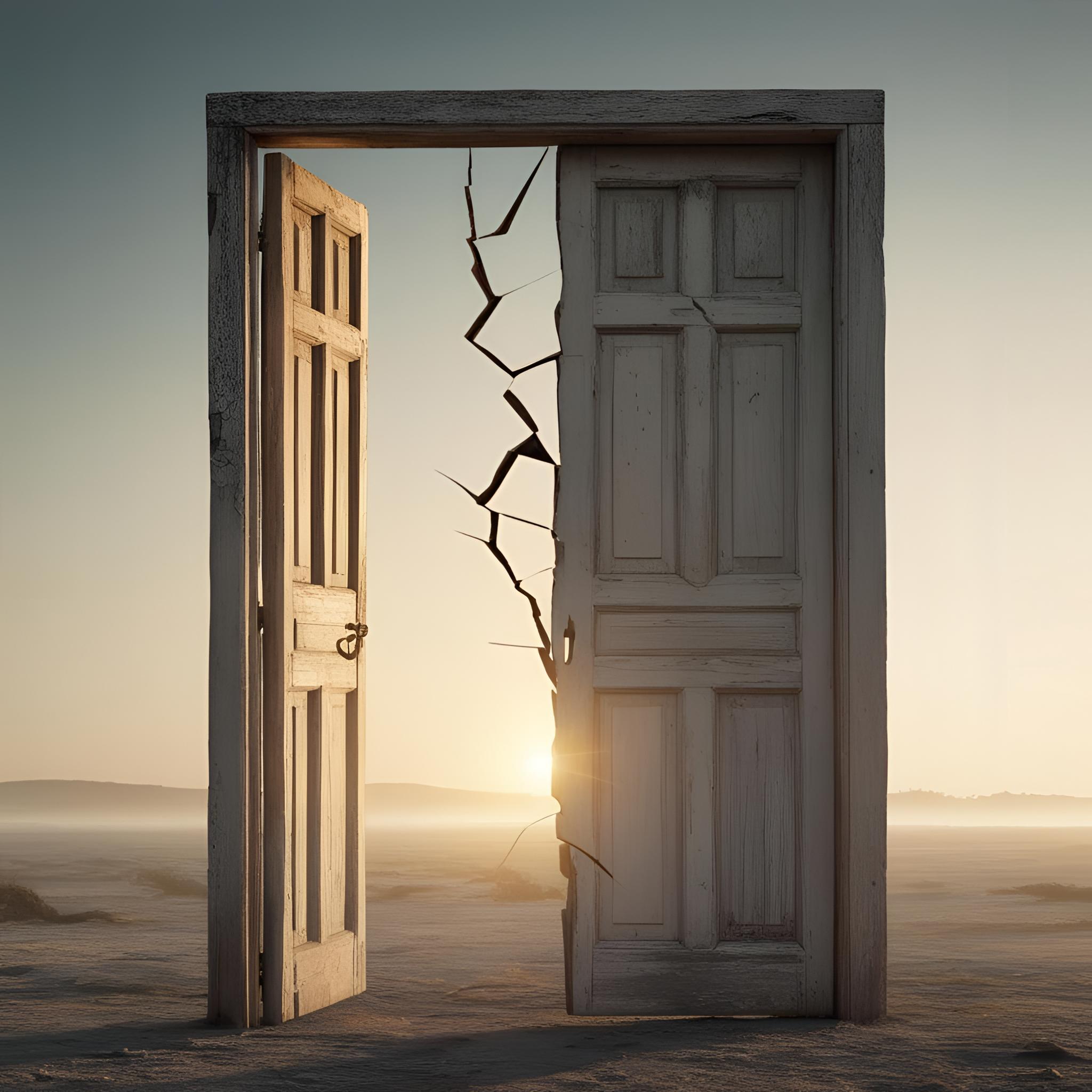
It asks you to accept that some doors will never open, some apologies will never arrive, and some people will go to their graves convinced that they did nothing wrong.
There will be no final scene in which they understand everything. No perfect conversation that repairs the years. No sudden revelation that makes your suffering meaningful.
Life does not owe us a satisfying ending.
And perhaps that is the cruelest part of growing up: discovering that we can do everything right on our side and still never receive the ending we deserved.
But we can stop giving our lives to endings that exist only in our minds.
We can stop confusing waiting with loving, wishing with knowing, and possibility with probability.
We can let the facts speak, even when their voices are unbearable.
Because the truth, however ugly, has one advantage over hope.
The truth allows you to make decisions. Hope can keep you waiting forever.
I don’t think we should eliminate hope from our lives. A world without hope would be an unbearable place, and not every uncertain future deserves to be approached with suspicion.
We need hope to begin again, to create, to imagine, to build things that have never existed. We need it when the facts are incomplete and the future is genuinely open.
But we must learn where to place it.
Place it in your ability to survive disappointment. In your capacity to learn. In the possibility of a life you have not yet imagined. In people who demonstrate, through their actions, that trust is not wasted on them.
Do not place it blindly in someone who has spent years showing you exactly who they are.
Do not turn your heart into a courtroom where evidence is endlessly dismissed because the defendant happens to be someone you love.
And do not spend the remainder of your life waiting for age to perform a miracle that character has never attempted.
Hope is beautiful when it opens a door.
It is cruel when it chains you to one that will never open.
The tragedy is not that we hope. The tragedy is that sometimes we hope so desperately that we stop living in the world we have and begin living in the world we wish existed.
We wait for people to become kinder. We wait for them to understand. We wait for justice, recognition, apologies, and the return of everything we gave away.
We wait for the past to change its mind.
It never does.
And one day, if we are fortunate enough to become wise, we may discover that the person we were waiting for all those years was not the person who hurt us.
It was ourselves.
The person who would finally stop making excuses. The person who would look at the facts without decorating them. The person who would understand that love does not require blindness, that compassion does not require submission, and that a lifetime is a terrible thing to spend waiting for someone else to become decent.
Hope may be the last thing to die.
But that does not mean we should let it be the last thing to live.
If these words stayed with you, share them.
Disclaimer: Featured image generated with AI.
A quiet chamber behind the visible world.
We value your trust!
Your address is safe in the vault.
We’ll only use it to send you letters worth opening; no spells, no spam, no secret salesmen.