The Impossible Burden of Proving You Wrote Your Own Book
There was a time when writing a book was considered sufficient evidence that somebody had written a book.
You sat down, you thought, you wrote, you crossed out half of what you had written, you hated the remaining half, you returned to it three days later, and eventually you decided that the manuscript was finished. You put your name on it and sent it into the world, where people were free to like it, hate it, misunderstand it, ignore it, or use it to level a wobbly table.
Nobody expected you to provide a forensic reconstruction of your creative process.
Then we invented a machine capable of producing convincing prose, and suddenly the writer became a suspect.
Now, if you publish a book, you may find yourself facing a question that sounds reasonable until you examine it closely: How can you prove that you wrote it yourself?
The question is not unreasonable because authorship should never be questioned. Plagiarism exists. Fraud exists. Ghostwriting exists. People have always put their names on work produced by other people, sometimes with their knowledge and sometimes without it.
The problem begins when suspicion becomes the default position, and the burden of proof shifts from the person making the accusation to the person being accused.
You wrote the book. Prove it.
And no, your word is not enough.
Neither is your manuscript.
Your drafts? They could have been generated by AI.
Your notes? AI can generate notes.
Your writing diary? AI can invent a convincing account of your creative development, complete with moments of uncertainty, rejected ideas, and the occasional existential crisis. Machines have become remarkably good at imitating human hesitation. Apparently, even our inability to make up our minds has become automatable.
You might present several versions of the manuscript, each showing the development of an argument, the evolution of a character, or the gradual replacement of a terrible sentence with a slightly less terrible one. But a sufficiently capable system could generate those versions, too.
You could produce a timeline, a folder of research materials, and a collection of explanations about why you made particular creative decisions. None of these things, considered in isolation, proves that you wrote the book.
We have arrived at a peculiar situation in which the evidence of human work can itself be manufactured by the very technology whose involvement we are trying to establish.
This is not merely an inconvenience for writers. It is an epistemological problem, which is a rather grand way of saying that we are becoming less certain about how we know what we claim to know.
The Evidence Has Lost Its Innocence
For centuries, documents have served as evidence of events, transactions, agreements, and intentions. We have trusted signatures, correspondence, manuscripts, photographs, and records because producing them required some connection to the event they documented.
That connection was never infallible. Documents could be forged, signatures imitated, photographs manipulated, and witnesses could lie. The difference is that producing convincing false evidence traditionally required effort, skill, access, or cooperation.
Generative AI changes the economics of fabrication.
A machine can now produce not only a finished text but also plausible supporting material: preliminary drafts, alternative versions, outlines, summaries, correspondence, and explanations of how the work supposedly developed. The distinction between an authentic record and a fabricated one becomes harder to establish when both can be generated with comparable ease.
The existence of a document tells us that the document exists. It does not automatically tell us who created its contents.
A timestamp establishes something about when a file was recorded or preserved, depending on the system involved. It does not, by itself, establish who wrote the words inside it.
A cryptographic hash can help establish that a particular file has not changed since a recorded point in time. It cannot certify that a human being composed the file before that point.
A deposit with an official body can help establish the existence and contents of a work at a particular date. It does not magically identify the mind responsible for every sentence.
These tools remain useful. Their limitations do not make them worthless. They simply cannot be asked to prove something they were never designed to prove.
We must distinguish between evidence that a text existed, evidence that a particular person possessed it, evidence that the text developed over time, and evidence that the person actually authored it.
Those are four different claims.
Treating them as interchangeable is convenient, but convenience has never been a particularly reliable method of establishing truth.
The Alibi Problem
Imagine that a writer is accused of using AI to generate an entire novel.
The writer presents early drafts, research notes, dated emails, and correspondence with an editor. The records are consistent. The editor confirms receiving chapters months before publication. Several passages changed between versions, and the changes correspond to discussions documented in the correspondence.
This is a considerably stronger case than a writer simply producing a folder of files after being challenged.
Why? Because independent records provide corroboration. They are not all controlled by the person whose authorship is in question.
Could AI still have generated the original text? Yes.
Could the writer have used AI to prepare the correspondence and then arranged for the editor to participate unknowingly in a fabricated history? In principle, yes.
Could the entire chain of evidence have been manipulated? Again, in principle.
But notice what has happened. We have moved from asking whether the writer can provide evidence to asking whether every conceivable alternative explanation can be eliminated.
Those are not the same standard.
If we demand absolute certainty, we can reject almost any historical claim. Witnesses can be mistaken. Documents can be forged. Records can be manipulated. Even apparently independent sources may share an undiscovered connection.
The fact that evidence can be fabricated does not mean all evidence is equally unreliable. It means that evidence must be evaluated according to its provenance, independence, consistency, and susceptibility to verification.
The same principle applies to authorship.
A collection of files created by the person under suspicion is not equivalent to records independently preserved by several people or systems. Neither is infallible, but one may provide considerably stronger grounds for confidence.
The sensible objective is not mathematical certainty. It is a reasonable conclusion supported by converging evidence.
Unfortunately, the internet has developed a taste for certainty without developing a corresponding appetite for careful reasoning.
Can We Test the Text Itself?
Perhaps we can avoid the documentary problem and examine the writing.
AI detectors promise to identify machine-generated text by analysing patterns in language. Such systems can be useful for limited investigative purposes, but they cannot reliably establish authorship from the finished text alone.
Human writing can be predictable. Machine-generated writing can be varied. A writer may have an unusually regular style, while an AI-generated passage may imitate an idiosyncratic voice.
Editing complicates matters further. A human can revise AI-generated text, and AI can help revise human-generated text. A manuscript can pass through several stages of collaboration before publication.
What, exactly, is a detector supposed to identify? The origin of the first draft? The origin of the final sentences? The proportion of human intervention? The source of the ideas? The identity of the person responsible for the final creative decisions?
These are different questions, and a single probability score cannot answer all of them.
A detector might label a passage as likely AI-generated. That is not proof that a machine wrote it. A detector might label a passage as likely human-written. That is not proof that a human wrote it.
The danger is not simply that the technology makes mistakes. It is that people may treat a probabilistic assessment as a verdict.
Once a number appears on a screen, it acquires an authority that its methodology may not deserve. We have always been impressed by numbers, particularly when they spare us the inconvenience of thinking.
A percentage is not a witness. An algorithm is not an eyewitness to the past. It has no secret recording of the author’s hands moving across the keyboard.
It has a model, a method, and a margin of error.
That is all.
The Writer’s Strange New Burden
Consider a writer who has spent two years developing a book entirely through their own thought, research, imagination, and labour.
They have made the decisions. They have constructed the argument, invented the characters, selected the words, discarded the alternatives, and accepted responsibility for the finished work.
They then use AI to create the cover.
Perhaps the cover is an image of a ruined city, a mysterious face, or an object that captures the atmosphere of the book. The writer has used a tool to produce a visual element, much as another writer might commission an illustrator, use a design program, or combine stock imagery.
The book is published.
Someone discovers that AI was used for the cover and concludes that the manuscript must also have been generated by AI.
The conclusion does not follow from the evidence.
The tool used to produce the cover tells us something about the production of the cover. It does not establish the origin of the manuscript.
Nevertheless, the writer may now feel obliged to prove that every sentence is their own.
They may be asked to provide drafts, explain their vocabulary, defend their stylistic choices, submit the text to detectors, or demonstrate that they can reproduce their own writing under observation.
This creates an extraordinary asymmetry.
The person making the accusation can offer a suspicion. The person being accused must reconstruct a creative process that may have taken months or years, often without having anticipated that such reconstruction would ever be necessary.
And what happens if the writer has no dated drafts? What if they composed sections in their head before typing them? What if they wrote directly into a manuscript and revised it as they went? What if their computer failed and their backups disappeared?
Do they become less of an author because they were insufficiently prepared for a future in which their honesty might be questioned?
A missing paper trail may limit what can be demonstrated. It does not establish that the work was generated by a machine.
We should be careful not to confuse the absence of evidence with evidence of absence, or, in this case, the absence of documentation with evidence of artificial authorship.
The Human Mind Does Not Produce Receipts
There is another difficulty with demanding proof of human authorship: creative work does not always happen in a form that can be documented.
Writers have different methods.
Some plan every chapter before writing the first sentence. Others discover their books as they go. Some write extensive notes. Others carry an argument in their heads for years before finding the language in which to express it.
A sentence may emerge after hours of deliberate thought. Another may arrive almost fully formed while the writer is washing dishes.
A character may change because the plot demands it, because the writer recognises an inconsistency, or because something in the character’s behaviour suddenly feels false.
These decisions are not always accompanied by an internal commentary that can later be reproduced as evidence.
The writer does not necessarily know why one word feels right and another does not. They may recognise a false note before they can explain what makes it false. Their expertise may be real even when their ability to describe it is incomplete.
To demand a complete, reconstructable record of every creative decision is to misunderstand the activity being examined.
A writer is not a factory producing sentences alongside a separate audit log explaining the manufacture of each one.
Human creativity is often irregular, intuitive, contradictory, and difficult to reconstruct. That does not make it mysterious in a supernatural sense. It makes it human.
And it means that a test requiring every genuine writer to explain their process in a particular way will inevitably exclude some genuine writers.
The inability to perform convincingly under interrogation is not proof of intellectual fraud.
What Would Convincing Proof Look Like?
If absolute proof is unavailable, we should stop pretending that it is the only acceptable standard.
A more defensible approach would combine several kinds of evidence.
First, independently preserved records created during the writing process. Correspondence, editor feedback, and version histories can establish a credible chronology.
Second, evidence of continuity between the writer’s earlier work and the book in question. This may help establish context, although similarity of style is not conclusive and a change in style is not evidence of fraud.
Third, a substantive discussion of the work. The author may be able to explain its underlying decisions, identify weaknesses, discuss alternative approaches, and revise passages while preserving the work’s intended meaning or effect.
Fourth, transparent disclosure of the tools used. If AI generated the cover, say so. If it helped with research, editing, translation, or drafting, describe that involvement accurately.
The objective is not to claim that any one of these measures is infallible. It is to establish a credible account that fits the available evidence better than competing explanations.
Even then, the conclusion remains one of justified confidence, not absolute certainty.
This is not a weakness peculiar to authorship. It is how responsible reasoning works in situations where the past cannot be observed directly.
We routinely make judgments about events we did not witness. We assess evidence, compare explanations, consider alternative possibilities, and reach conclusions proportionate to what is known.
Authorship should not require a magical exception to those ordinary rules.
Nor should writers be expected to prove their humanity by performing a ritual designed around the limitations of detection technology.
The Question We Should Be Asking
There is a more important question hiding beneath the demand for proof.
Why are we so ready to treat the possibility of AI involvement as a reason to distrust the person who created the work?
Part of the answer is legitimate concern. AI has made it easier to generate content at scale, imitate existing styles, produce misleading material, and obscure the contribution of the people or systems involved. Readers, publishers, teachers, and employers have genuine reasons to care about provenance and disclosure.
But another part of the answer is the temptation to replace judgment with classification.
We want to divide the world into human and artificial, original and generated, authentic and fraudulent. We want a reliable label that will tell us what deserves attention and what can be dismissed.
The difficulty is that the categories are becoming less simple.
A human may use AI to edit a paragraph they wrote. An AI-generated draft may undergo extensive human revision. A person may develop the ideas, structure, and argument of a book while using a machine for selected passages. Another may generate a manuscript almost entirely through prompts and publish it under their own name.
These situations are not identical. Treating them as identical obscures the very distinctions that matter.
The relevant questions include who originated the expressive material, who made the substantial creative decisions, how much human contribution shaped the final work, what rights apply, and whether the creator has represented that contribution honestly.
The answers will vary according to the work and the circumstances.
A cover generated with AI is not equivalent to a novel generated with AI. Editing a human-written essay is not equivalent to delegating its entire composition. Using a tool does not, by itself, establish either the presence or absence of meaningful human authorship.
We need more precise distinctions, not broader accusations.
And we need to recognise that the legitimacy of a claim does not depend on whether it can be proved with absolute certainty.
When Suspicion Becomes an Impossible Standard
Imagine applying the same reasoning to other forms of creative work.
A painter uses digital software to prepare a reference image. Does the finished painting cease to be theirs?
A composer uses notation software to prepare a score. Does the software become the composer?
A photographer uses computational tools to process an image. Does the camera’s software become the photographer?
In each case, the answer depends on the actual contribution of the human and the tool, not merely on the presence of technology.
Writing deserves the same careful treatment.
This does not mean that every claim of authorship should be accepted without scrutiny. It means that scrutiny must be proportionate, relevant, and based on evidence rather than assumptions.
If someone alleges that a writer misrepresented AI-generated text as entirely their own, they should identify the grounds for that allegation. The writer may then respond with the evidence reasonably available to them.
The precise legal burden of proof will depend on the jurisdiction and the type of dispute. But as a matter of ordinary reasoning, the inability to prove a negative with absolute certainty is not a sound basis for treating an accusation as established.
Otherwise, every writer becomes permanently vulnerable to an allegation that cannot be conclusively disproved.
The accusation would be easy to make, difficult to resolve, and impossible to extinguish.
That is not accountability. It is a machine for manufacturing suspicion.
The Right to Be Believed
There is no universal test that can certify a finished manuscript as one hundred per cent human-written. There is no infallible detector, no document that guarantees authorship, and no collection of drafts that cannot, in principle, be fabricated.
But this does not mean that authorship is unknowable, that evidence is useless, or that every claim deserves equal credibility.
It means that we must abandon the fantasy of perfect verification and return to the more demanding work of evaluating evidence properly.
We must distinguish between proof of a document’s existence and proof of its authorship. Between the use of a tool and the delegation of creative responsibility. Between a reasonable suspicion and an established fact.
And we must acknowledge that some uncertainty is unavoidable.
A writer who has used AI to create a cover can disclose that fact without conceding anything about the origin of the manuscript. A writer who has written the entire book independently can provide whatever evidence exists without pretending that the evidence is infallible.
The rest requires judgment.
Not blind trust. Not automatic suspicion. Judgment.
Perhaps that is the part we are trying to automate, too.
We would like technology to tell us which books are authentic, which authors are honest, which thoughts are original, and which human beings deserve to be believed. We want a machine to settle questions that require us to examine the evidence, understand the circumstances, and accept that certainty has limits.
But a detector cannot replace a standard of proof, and a probability score cannot replace a reasoned conclusion.
The most honest answer to the question, “Can you prove that you wrote this book?” may therefore be both less satisfying and more intellectually rigorous than either side would prefer:
“I can provide evidence of my authorship. You can evaluate that evidence. But I cannot produce a form of proof that makes fabrication logically impossible, because no such form exists.”
That is not an admission of guilt.
It is a recognition of reality.
And if we insist that every writer must prove, beyond every conceivable doubt, that a machine did not produce their work, we will eventually create a world in which nobody can establish authorship to the satisfaction of the permanently suspicious.
The machines will continue generating convincing evidence.
The detectors will continue producing probabilities.
The accusations will continue circulating.
And the writer will be left defending the one thing that should never have required an artificial certificate in the first place: the truth about their own work.
Perhaps the real question is no longer whether a human can prove they wrote a book.
Perhaps it is whether we are still capable of distinguishing evidence from certainty, suspicion from knowledge, and technological possibility from established fact.
Because the moment we confuse those things, we do not merely put writers on trial.
We put the very idea of proof on trial, too.
If these words stayed with you, share them.
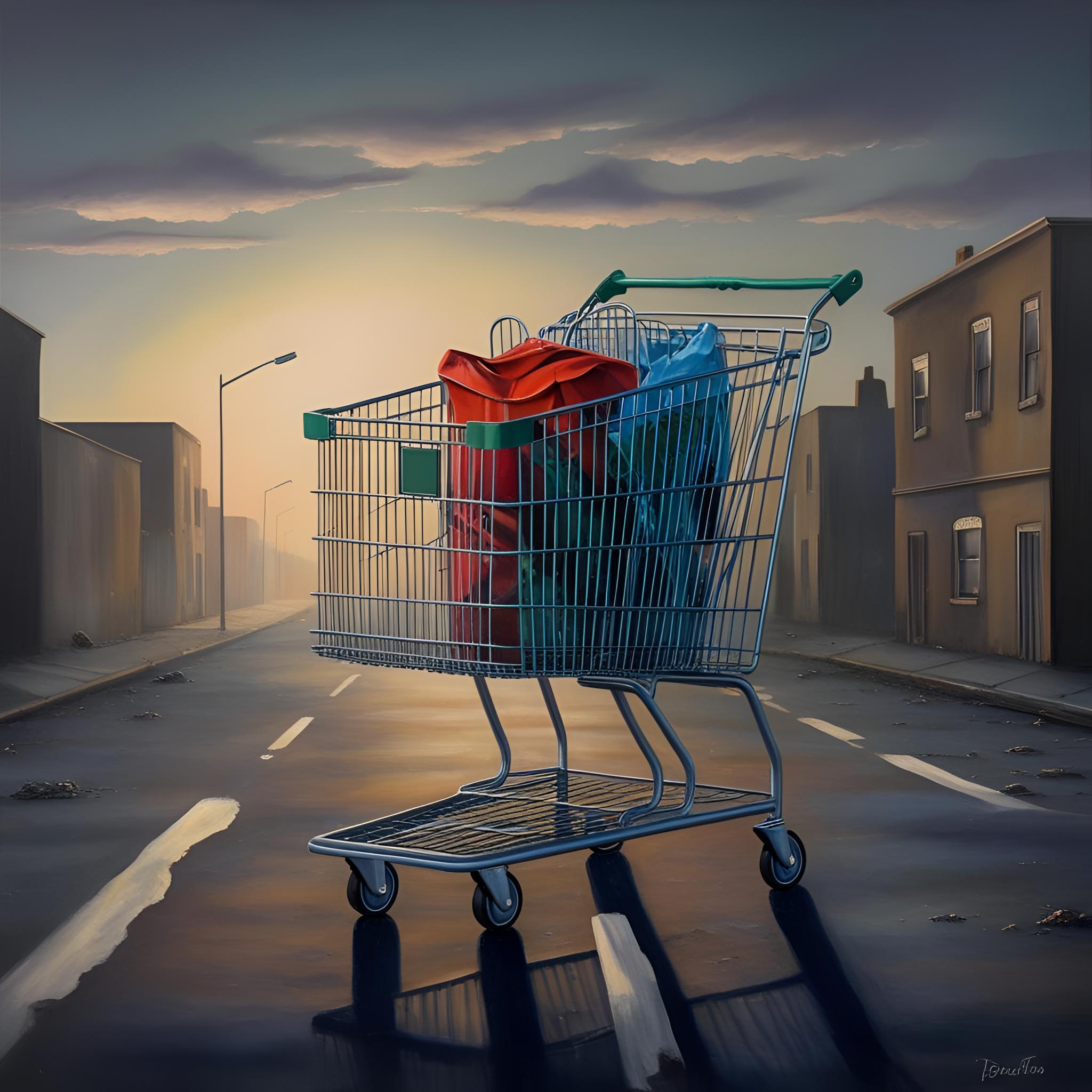
Disclaimer: Featured image generated with AI.
A quiet chamber behind the visible world.
We value your trust!
Your address is safe in the vault.
We’ll only use it to send you letters worth opening; no spells, no spam, no secret salesmen.