On musical taste, artistic quality, identity and the curious business
of looking like what you listen to
There is a question I have never particularly enjoyed answering: What kind of music do you like?
It is not that I don’t know. Quite the opposite. I have spent most of my life surrounded by music. I have played professionally, on violin and viola, for 47 years. My education is in music, and music has been part of my life since I was four years old. It has accompanied my childhood, shaped my thinking, challenged my abilities and provided me with a language that words cannot always replace.
Yet, when someone asks me what kind of music I like, my usual answer is: good music.
This is rarely considered a satisfactory response.
People want categories. Classical, jazz, rock, pop, metal, folk, electronic. They want to know which shelf to put you on, preferably before you have finished your sentence. Apparently, enjoying music is not enough. One must also declare allegiance to a particular musical territory.
If pressed, I will say that classical music is the best. I am not particularly embarrassed by that opinion. Its historical depth, compositional complexity, structural possibilities and extraordinary expressive range make it an immense artistic achievement. Centuries of musical thought have accumulated within it, and the possibilities are still far from exhausted.
But then comes the complication.
I also find some symphonic metal absolutely brilliant.
Yes, metal. The genre that, in the popular imagination, occasionally seems to require black clothing, aggressive facial expressions, an impressive collection of metal objects attached to one’s body and a general dissatisfaction with the existence of sunlight.
And yet, some of its compositions demonstrate an astonishing understanding of orchestration, harmonic development, dramatic structure, rhythmic complexity and emotional architecture. When symphonic metal is done well, it can be an extraordinary meeting between orchestral tradition and contemporary musical expression.
Why should I reject it because it belongs to a different genre?
I don’t listen to the label. I listen to the music.
And perhaps that is where the real difference begins.
The tyranny of musical categories
Genres are useful. They help us organise musical history, identify traditions, understand influences and communicate artistic intentions. They are descriptive tools.
The problem begins when descriptions become boundaries.
A person who listens exclusively to jazz may have developed a profound understanding of its language. Another may listen exclusively to classical music and possess an extraordinary knowledge of its repertoire. There is nothing wrong with specialisation. Deep knowledge requires concentration, and musical traditions deserve serious study.
But specialisation is not the same as artistic superiority, and familiarity is not the same as open-mindedness.
A musical genre is not a guarantee of quality. There is magnificent music and terrible music in practically every category. A complicated composition is not automatically good, just as a simple melody is not automatically inferior. Technical difficulty can serve artistic expression, but it can also become an exercise in showing off.
The question should not be whether a piece belongs to the right genre. It should be whether it succeeds as music.
Does it communicate something? Does it possess coherence? Is there imagination behind its construction? Does it make meaningful use of its musical language? Does it move, challenge, surprise or transform the listener?
And, perhaps most importantly, does it have something to say?
I find it strange that people who claim to love music can sometimes be so reluctant to explore anything outside their preferred category. It is rather like loving literature but refusing to read anything except detective novels, then declaring that poetry has nothing to offer.
One can have preferences without turning them into prisons.
When music becomes a uniform
There is another phenomenon I find even more curious: the tendency to dress according to one’s musical preferences.
Apparently, liking a particular type of music is no longer sufficient. One must also look like someone who likes it.
If you are a classical musician, should you walk around wearing a black evening gown, perhaps with a discreet pearl necklace and the expression of someone who has just discovered another movement in a Mahler symphony?
Should jazz enthusiasts permanently wear hats? Should country music fans dress as if they have just returned from a cattle auction? Should electronic music enthusiasts look like they have escaped from a futuristic laboratory?
Naturally, these are absurd questions. Yet the equivalent is perfectly normal when it comes to other musical cultures.
The visual identity associated with metal is particularly recognisable. Black clothes, leather, chains, piercings, tattoos, dramatic hairstyles, torn fabrics and sometimes an almost theatrical presentation of aggression.
There is nothing inherently wrong with any of these things. People are entitled to dress as they please, experiment with their appearance and create their own visual identities.
What interests me is the association itself.
Why should a musical preference determine how someone presents themselves to the world? And why should the appearance of a person be treated as evidence of their understanding of the music?
The answer probably has less to do with music than with identity.
For many young people, particularly during adolescence, music provides an opportunity to establish belonging and distinction simultaneously. It offers a community, a shared vocabulary, a set of references and a visible way of saying: I am not like everyone else.
Clothing becomes a declaration. Hairstyles become symbols. Piercings and accessories become part of a visual language.
This is not unique to metal, nor is it necessarily new. Every generation has developed its own methods of expressing rebellion, belonging and independence.
But there is a curious contradiction in the desire to demonstrate individuality by adopting an instantly recognisable uniform.
The individual wants to be different, but the difference comes with a dress code.
The music is not responsible for the behaviour
Here I want to make an important distinction.
I sometimes find the attitudes associated with certain musical subcultures unpleasant: the cultivated arrogance, the glorification of hostility, the deliberate performance of aggression and the assumption that being offensive is evidence of being interesting.
But I refuse to blame the music for these things.
Metal is not a personality disorder.
Aggressive sound does not necessarily produce aggressive behaviour. Darkness in music does not mean darkness in character. A listener can find emotional release in music that expresses rage, despair, violence or frustration without wishing to reproduce any of those things in real life.
In fact, music can provide a safe space for emotions that might otherwise remain unexpressed.
A person can listen to the most brutal musical passage and be perfectly gentle. Another can listen to the most delicate piece of classical music and behave like an absolute tyrant.
Musical taste is not a certificate of moral character.
Nor is artistic sophistication necessarily accompanied by good manners. History provides more than enough evidence that extraordinary artistic ability and unpleasant human behaviour can coexist.
We should stop confusing the emotional content of art with the personality of the person experiencing it.
A composer can write about death without being obsessed with dying. A musician can perform a furious passage without being an angry person. A listener can enjoy the dramatic intensity of metal without subscribing to an ideology of hostility.
The same principle applies to every genre.
Music is the voice of emotions, but also the architecture of thought
Music is often described as the universal language of emotions. This is true, although perhaps incomplete.
Music is also mathematics, architecture, physics, memory, cultural history, experimentation and intellectual discipline.
It can be spontaneous or meticulously constructed. It can be primitive in its simplicity or extraordinarily sophisticated in its complexity. It can communicate through a single repeated note or through an entire symphonic structure.
Its emotional power does not depend exclusively on its volume, complexity or instrumentation.
Sometimes a single violin phrase can express more than an entire orchestra. Sometimes a distorted electric guitar can communicate something that a beautifully played piano cannot. Sometimes silence is the most important element of a composition.
This is why I find the boundaries between genres so uninteresting when they become ideological.
I can appreciate a Bach fugue, a Mahler symphony, a jazz improvisation, a beautifully constructed film score and a powerful symphonic metal composition without feeling that I have betrayed one musical tradition by enjoying another.
They are different languages, but they belong to the same extraordinary human capacity to create sound with meaning.
And I don’t need to change my clothes between them.
A final note to the music itself
Perhaps my objection is not really to musical subcultures, unusual appearances or the enthusiasm with which people identify themselves.
It is to the reduction of music to a social label.
Music deserves better than that.
It deserves listeners who are willing to hear beyond their expectations, musicians who are interested in artistic possibilities rather than tribal loyalties, and audiences who can distinguish between genuine artistic expression and the commercial packaging of an identity.
Wear black. Wear pink. Shave your head, grow your hair, pierce your nose, dress like a nineteenth-century aristocrat or walk around in ordinary clothes. It really doesn’t matter.
Listen to metal, Mozart, jazz, folk, rock or something that hasn’t yet been invented.
But please, don’t mistake the uniform for the art, the genre for the quality, or the appearance for the personality.
I have spent 47 years playing music. I have no intention of spending the rest of my life explaining why I don’t need to look like the music I love.
And when somebody asks me what kind of music I like, I suspect I will continue giving the same unsatisfactory answer.
Good music.
Not because I cannot choose a genre.
Because I refuse to confuse the container with what it contains.
If these words stayed with you, share them.
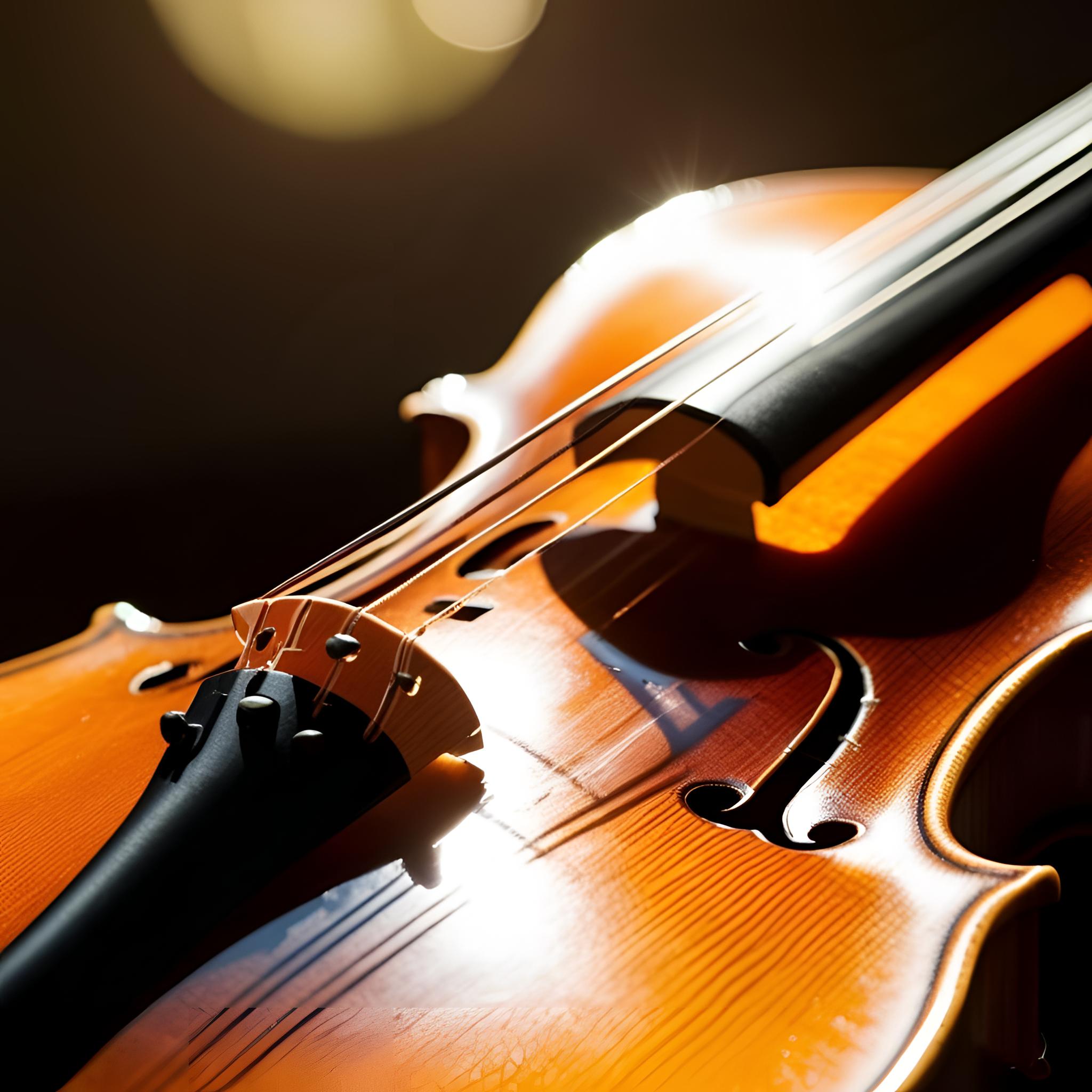
Disclaimer: Featured image generated with AI.
A quiet chamber behind the visible world.
We value your trust!
Your address is safe in the vault.
We’ll only use it to send you letters worth opening; no spells, no spam, no secret salesmen.