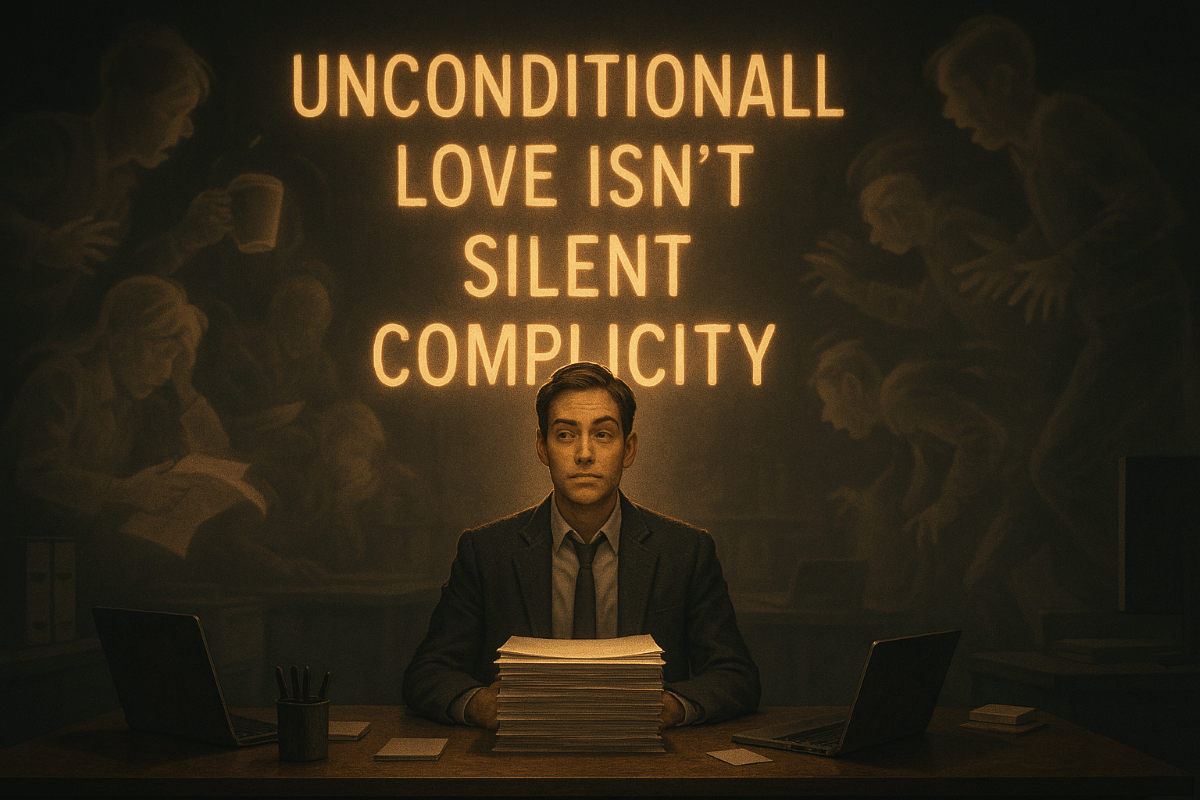
Negative Feedback is a Pain
Here is the uncomfortable truth no one sells in creative writing courses, right between “find your voice” and “build your platform”: if you write and let other humans read it, some of them will dislike it. Some will dislike it loudly. Some will dislike it with spelling mistakes and moral certainty. Some will dislike it because your book reminded them of themselves, and they hate that far more than bad prose.
Negative feedback is not a glitch in the system. It is the system.
Writers like to imagine feedback as a kind of divine transmission. The reader reads. The reader feels something profound. The reader writes a message that says, “This changed my life.” The writer nods, vindicated, and continues writing in a sunlit room full of houseplants and purpose.
Reality is messier. Reality leaves one-star reviews like cigarette burns on a manuscript. Reality says things like I didn’t connect, this was boring, the characters were unlikable, why would anyone write this. Reality sometimes doesn’t even finish the sentence.
So how do writers deal with negative feedback from readers?
Badly at first. Always badly.
The first reaction: the private collapse
Every writer, no matter how seasoned, has a moment where negative feedback lands not on the work, but directly on the chest. It bypasses intellect. It ignores context. It goes straight for identity.
You are not thinking, This reader didn’t like my pacing.
You are thinking, I have been exposed as a fraud.
This is not immaturity. This is biology. Writing is one of the few professions where the product is made of inner material. Time, memory, observation, shame, obsession. You hand it over, and someone says, “No, thanks,” and your nervous system hears, Reject the human.
The problem is not that writers feel this. The problem is that nobody admits it. So, everyone assumes they are uniquely fragile, uniquely unsuited for the task, uniquely failing some invisible test of resilience.
They are not.
Negative feedback hurts because writing is vulnerable by design. If it didn’t hurt, it wouldn’t matter. And if it didn’t matter, you wouldn’t write.
The second reaction: rationalisation and revenge fantasies
Once the initial emotional impact fades, the mind steps in, armed with explanations.
The reader didn’t get it.
The reader isn’t my audience.
The reader probably skimmed.
The reader clearly doesn’t understand symbolism.
The reader has bad taste.
The reader should write their own book then.
This stage is important. Not because these thoughts are always true, but because they protect the writer long enough to keep them from quitting. Ego is not the enemy here. It is a temporary shelter.
Many writers get stuck here. They build a fortress of superiority and call it confidence. Every critique becomes proof of the reader’s inadequacy. Every negative comment is dismissed as ignorance. Growth stops. The work repeats itself. The writing becomes safe, mannered, embalmed.
Others swing the opposite way. They believe every word of criticism. They revise themselves into oblivion. They sand down every sharp edge until the work is polite, inoffensive, and dead.
Neither extreme is useful.
The real work begins later, when the noise settles, and something quieter asks to be heard.
Separating pain from information
Negative feedback contains three elements, often tangled together:
- The reader’s emotional response
- The reader’s interpretation
- Potentially useful information about the text
Only the third one helps you write better. The first two are about the reader, not you.
A reader may say, “I hated this character.” That does not mean the character failed. It may mean the character succeeded too well. Or it may mean the reader needed likability, and you offered complexity. Or it may mean the character was underdeveloped. All three are possible.
Feedback is not a verdict. It is data. Messy, biased, emotionally charged data.
Experienced writers learn to translate feedback instead of absorbing it raw. They listen for patterns, not volume. One angry reader is a noise. Ten readers tripping over the same scene is a signal.
This takes time. It also takes distance. Which is why many writers do not read reviews at all while drafting new work. Not because they are weak, but because attention is finite and fragile. You cannot listen deeply to a story while a chorus of opinions is shouting in your ear.
The myth of universal approval
Somewhere along the way, writers are sold the idea that good work is widely loved. That if you just polish enough, revise enough, care enough, the negativity will disappear.
It will not.
Every book that matters has enemies. Not critics. Enemies.
Because meaningful writing takes a position. It has a temperature. It chooses what to look at and what to ignore. It refuses neutrality. And refusal makes people uncomfortable.
Books that aim to please everyone often succeed at pleasing no one deeply. They are consumed, forgotten, and praised for being “easy.” Easy is not an insult, but it is rarely a legacy.
Negative feedback is often the shadow cast by specificity. If someone feels strongly enough to reject your work, it means the work did something. It pushed. It pressed. It disturbed their internal furniture.
The absence of negative feedback is not peace. It is silence.
When feedback is cruel, not critical
Not all feedback deserves analysis. Some of it is simply unkind.
There is a difference between “This didn’t work for me” and “You should stop writing.” The first is an opinion. The second is a performance of power.
Online spaces collapse distance and accountability. Readers forget there is a person on the other side of the page. Or they remember and choose to be cruel anyway. Writers are expected to accept this as the price of visibility.
They do not have to internalise it.
Learning to discard abusive feedback is not denial. It is hygiene. You do not keep every object that enters your house. You throw away what is rotten.
The ability to say this is not for me applies to criticism too.
The quiet discipline of selective listening
Mature writers develop a filtering system. Not a wall, but a sieve.
They ask questions like:
- Does this feedback come from someone who read attentively?
- Does it address the work, not my worth?
- Does it align with concerns I already had?
- Does it challenge me in a way that feels uncomfortable but precise?
If the answer is no, the feedback is released.
If the answer is yes, the feedback is considered slowly, without panic. Not obeyed. Considered.
This is where many writers stumble. They confuse humility with submission. They believe listening means agreeing. It does not.
Listening means allowing feedback to exist without letting it drive the car.
The role of time
Immediate reactions are almost always wrong.
A comment that feels devastating today may feel obvious in six months. A critique that enrages you now may later reveal a structural flaw you were circling but avoiding.
Time converts emotional feedback into technical insight.
This is why revision should never happen in the heat of response. Writing under the influence of praise or rejection produces defensive work. The prose tightens. The risks shrink. The voice flattens.
Distance restores curiosity. And curiosity is the only mental state from which good revision comes.
Writers who quit and writers who stay
Negative feedback does not separate good writers from bad ones. It separates writers who stay from writers who leave.
The difference is not talent. It is tolerance.
Writers who last developed a strange relationship with rejection. They do not enjoy it. They do not seek it. But they stop treating it as a personal emergency.
They understand that writing is a long game played against your own sensitivity. They accept that some days the cost will feel higher than the reward. They continue anyway.
Not because they are brave. Because they are stubborn.
The hidden gift of negative feedback
Here is the part nobody wants to hear: negative feedback is often more useful than praise.
Praise feels good. Praise confirms. Praise soothes. Praise also rarely teaches.
Criticism, when honest and specific, points to friction. And friction is where craft lives.
The challenge is to receive it without self-erasure. To let it sharpen the work without dulling the voice. To change what needs changing and protect what makes the work yours.
This is not a formula. It is an ongoing negotiation between confidence and doubt. The balance shifts. Some days you lean on belief. Some days you lean on critique. Both are necessary. Neither should dominate.
Writing anyway
In the end, writers deal with negative feedback the same way they deal with everything else: by writing again.
They write through embarrassment. Through misunderstanding. Through unfair readings and fair ones. Through the suspicion that everyone else is doing it better. Through the fear that the last good thing they wrote was an accident.
They write knowing that the next reader may hate it too.
Not because they enjoy suffering. But because the alternative is silence. And silence is not neutral. Silence is a decision.
Writing is choosing to speak in a world that will answer back. Sometimes gently. Sometimes with teeth.
The job is not to make everyone like what you say.
The job is to keep saying it clearly, honestly, and with enough courage to survive the echo.
Negative feedback does not mean you failed. It means the work escaped your private mind and entered the public weather. It got rained on. It got dirty. It lived.
That is the price.
That is also the point.
You might want to read more about:
Atmospheric & Mythic Fiction: An Essential Guide to Liminal Storytelling
Let’s Write Liminal, Dreamlike Fiction
Subscribe
The Inner Orbit
We value your trust!
Your address is safe in the vault.
We’ll only use it to send you letters worth opening; no spells, no spam, no secret salesmen.