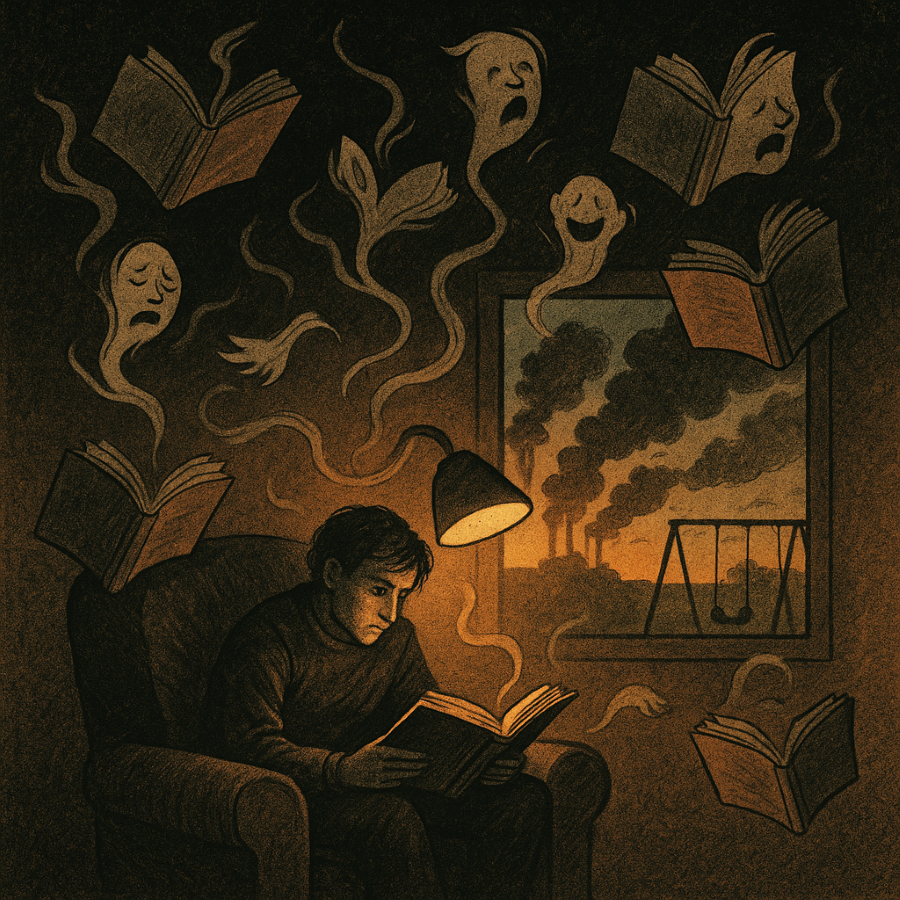
Emotionally intense fiction does not come from bigger explosions, louder arguments, or characters crying attractively in the rain. It comes from precision. From restraint. From knowing exactly where to press and when to pull away.
Intensity is not excess. It is focus.
If readers feel wrung out, haunted, or quietly rearranged after your story, it is because you made them inhabit an emotional truth rather than observe one from a safe distance.
Below are the principles that actually do the work.
1. Start With the Emotional Core, Not the Plot
Plot is architecture. Emotion is gravity.
Before outlining events, identify the emotional question at the centre of your story. Not the theme, not the message, but the ache.
Examples:
What does it feel like to be loved too late?
What does it cost to survive something no one believes happened?
What happens when relief arrives disguised as loss?
Every major scene should orbit this core. If a scene does not deepen, distort, or challenge that emotional question, it is decorative. Decorative scenes dilute intensity.
Emotionally intense fiction knows exactly what it is about and refuses to look away.
2. Let Characters Lie to Themselves
Characters who understand themselves perfectly are emotionally inert.
Intensity lives in contradiction. In what characters say versus what they avoid. In the gap between desire and self-permission.
A character might:
Claim they want forgiveness, while actually craving punishment.
Pursue freedom while recreating the cage.
Insist they are over something they structure their entire life around.
Do not rush to correct these lies. Let them breathe. Let them rot. Readers feel intensity when they recognise self-deception because they live inside it too.
3. Use Restraint as a Weapon
The most devastating moments are often quiet.
A withheld response.
A sentence that stops short.
A gesture that almost happens.
Avoid naming emotions unless the character would genuinely name them. Instead, show how the body reacts. How time behaves. How attention narrows or splinters.
Compare:
“She was devastated.”
versus“She folded the letter twice more than necessary and placed it back in the envelope, aligning the edges until they hurt her fingers.”
Restraint forces the reader to participate. Participation creates intensity.
4. Make the Setting Carry Emotional Weight
Setting should not be neutral. It should argue with the character.
A room can accuse.
A city can suffocate.
A landscape can echo what the character cannot articulate.
Let places remember things. Let objects become loaded through repetition. Emotional intensity deepens when the external world mirrors or mocks the internal one.
If a setting could be swapped out without consequence, it is underused.
5. Trust the Reader to Feel the Damage
Do not explain the impact of events. Show the aftermath.
Emotionally intense fiction lingers on:
The days after the argument.
The silence following the confession.
The new habits that form around a wound.
Readers do not need to be told what hurts. They need to see what has changed.
Trust is crucial here. Over-explaining is a lack of confidence, and readers feel that immediately.
6. Let Beauty and Pain Coexist
Intensity sharpens when beauty appears in the wrong place.
A tender moment during a crisis.
A laugh that arrives mid-grief.
A calm thought inside chaos.
This contrast prevents melodrama and reflects how emotion actually behaves. People do not feel one thing at a time. They feel collisions.
Allow complexity. Allow discomfort. Do not sanitize emotional experiences into neat arcs.
7. End With Resonance, Not Resolution
Emotionally intense stories do not always close doors. They leave echoes.
An ending should feel inevitable in retrospect but unsettling in effect. Something has shifted. Something cannot be undone. Even if the plot resolves, the emotional consequences should remain alive.
The reader should close the story feeling altered, not instructed.
Final Thought
Emotionally intense fiction is not about making readers cry. It is about making them recognise something they did not know how to name.
Write toward that recognition.
Be precise.
Be brave.
And resist the urge to soften the truth when it starts to sting.
That sting is the point.
Subscribe
The Inner Orbit
We value your trust!
Your address is safe in the vault.
We’ll only use it to send you letters worth opening; no spells, no spam, no secret salesmen.