The Word That Refuses to Sit Still
Spirituality is one of those words that floats.
It hovers gently above language, politely refusing to land anywhere specific. Ask ten people what it means, and you will receive ten answers, each delivered with the calm certainty usually reserved for gravity or taxes.
For some, spirituality is a connection to something greater. For others, it is self-discovery. For many, it is peace, awareness, presence, alignment, vibration, awakening, authenticity, or that pleasant sensation achieved after lighting a scented candle and thinking very hard about breathing.
Unlike religion, which at least provides architecture, rituals, calendars, and instructions printed in authoritative fonts, spirituality is gloriously unstructured. It is a personal journey. A private revelation. A customised operating system for meaning.
Its greatest strength is its flexibility. Its greatest weakness is its flexibility.
Spirituality can be everything, which means it can also be anything. And when something can be anything, it becomes extremely difficult to argue with. It becomes a soft fog through which people move with great confidence while seeing almost nothing clearly.
Historically, humans have always sought experiences that feel larger than ordinary life. They have named these experiences divine, sacred, transcendent, mystical, or simply important. From the teachings of Jesus Christ to the insights of Gautama Buddha, from the philosophical reflections of Laozi to the psychological explorations of William James, humanity has repeatedly tried to map the interior landscape of meaning.
The maps never match.
Spirituality survives precisely because it resists containment. It is the shape of longing itself.
Or, less poetically, it is what people say when they feel something meaningful but cannot produce measurable evidence.
Who Is Spiritual?
Officially, anyone can be spiritual.
Unofficially, people who describe themselves as spiritual often share certain recognisable features.
They believe reality contains hidden layers. They value introspection. They speak of growth. They often express a gentle dissatisfaction with ordinary material concerns. They may own at least one object whose purpose is unclear but whose energy is excellent.
More importantly, they believe that awareness changes everything.
To be spiritual is not merely to exist. It is to notice existence noticing itself. It is to watch thoughts while also having them. It is to observe emotions while feeling them. It is to step one inch backward from experience and say, “Interesting.”
In theory, spirituality is about humility. It recognises the vastness of existence and the limits of personal knowledge. In practice, however, something fascinating happens.
Humility is very difficult to display publicly.
And spirituality, despite its inward focus, rarely remains private.
The Birth of the Invisible Hierarchy
Human beings possess an extraordinary talent for transforming any meaningful pursuit into a ranking system.
Give them art, and they create critics. Give them morality, and they create judgment. Give them enlightenment, and they create levels.
Spirituality becomes hierarchical almost automatically.
The mechanism is simple.
If awareness is good, then more awareness must be better.
If growth is admirable, then advanced growth must be superior.
If awakening is possible, then some must be more awake than others.
And suddenly, without any formal structure, an invisible ladder appears.
No one claims to build it. Everyone knows it exists.
People begin to speak in subtle indicators:
“I am doing deep inner work.”
“I have healed many layers.”
“I see patterns others cannot.”
“I have moved beyond that stage.”
Spiritual vocabulary becomes a system of prestige signals. Not loud ones. Spiritual prestige must remain quiet, gentle, compassionate, and unmistakably higher.
The irony is elegant.
A path meant to dissolve the ego becomes a sophisticated method for refining it.
The old status markers were wealth, power, and knowledge. The new ones include consciousness, alignment, and frequency. The structure remains unchanged. Only the language becomes softer.
Instead of “I am more important,” the message becomes “I am more evolved.”
It is a socially acceptable form of transcendental superiority.
Enlightenment as Social Currency
Material success is measurable. Spiritual success is interpretive. This makes it extremely convenient.
No one can verify enlightenment. Therefore, it cannot be disproven.
This creates a fascinating economy. Individuals accumulate symbolic indicators of depth: retreats attended, practices maintained, realisations described, insights articulated. Each functions like a badge. None requires objective verification.
The more ineffable the claim, the safer it is from challenge.
If someone says they understand quantum physics, you can ask for equations.
If someone says they understand cosmic unity, you must nod respectfully.
Silence becomes evidence. Ambiguity becomes authority.
The more mysterious the explanation, the more profound it appears. Precision suggests limitation. Vagueness suggests transcendence.
Thus, spiritual capital accumulates through language that sounds meaningful while remaining beautifully resistant to definition.
Spirituality and the Reinterpretation of Suffering
Now we arrive at one of spirituality’s most emotionally powerful features: its ability to reinterpret pain.
Human suffering is unbearable when meaningless. It becomes tolerable when purposeful. Spiritual frameworks excel at transforming wounds into narratives of growth.
Adversity becomes initiation. Trauma becomes awakening. Hardship becomes refinement.
“You suffered, therefore you are stronger.”
“You endured, therefore you see deeper.”
“You struggled, therefore you are chosen.”
This is psychologically comforting. It protects the mind from chaos. It ensures that nothing painful is wasted.
But it also produces a subtle and complicated effect.
Pain becomes evidence of advancement.
The more one has suffered, the more one may feel authorised to claim depth. Survival itself becomes credential. Endurance becomes a qualification.
Suffering, once meaningless, becomes spiritual biography.
And here irony tightens its grip.
The person who struggled in a harmful environment may be told that this very damage granted them special perception. Their wounds are reframed as insight. Their difficulty becomes their distinction.
Pain is not merely healed. It is repurposed.
Sometimes this is empowering. Sometimes it is quietly burdensome. The individual must now honour suffering by transforming it into wisdom. To remain broken would be to waste the lesson.
Healing becomes responsibility.
The Noble Survivor Identity
Spiritual narratives frequently elevate resilience. The individual who endured hardship becomes a figure of moral authority. Their survival grants them a perspective that others lack.
This recognition can be deeply validating. It acknowledges experience. It honours struggle.
Yet it also risks transforming survival into identity.
The person becomes not simply someone who suffered, but someone who is defined by having suffered meaningfully. Their pain becomes part of their spiritual legitimacy.
To question their interpretation may appear insensitive. To disagree with their insights may appear dismissive of their journey.
Thus, suffering can become protected territory.
It is no longer merely personal experience. It becomes symbolic capital within spiritual discourse.
The Comfort of Explanatory Narratives
Why does this framework persist so strongly?
Because uncertainty is intolerable.
If hardship is random, existence feels unstable. If pain serves growth, existence feels structured. Spiritual interpretation restores narrative coherence.
Humans prefer meaningful difficulty to meaningless chaos.
This preference is ancient and persistent. Across cultures and centuries, individuals have sought ways to integrate suffering into purposeful stories. Spirituality excels at providing such integration.
It answers the unbearable question: Why did this happen?
Not with proof. With meaning.
And meaning, even imagined meaning, stabilises the mind.
Spirituality as Identity Construction
Modern spirituality often functions less as doctrine and more as identity architecture.
It shapes how individuals describe themselves, interpret experiences, and position themselves socially. It offers language for uniqueness, depth, and transformation.
It allows people to construct narratives in which they are both wounded and wise, searching and advanced, humble and subtly exceptional.
This duality is remarkably appealing.
One may claim incompleteness while simultaneously demonstrating progress. One may seek growth while displaying evidence of having grown. One may reject hierarchy while occupying a higher rung within it.
It is an elegant psychological arrangement.
The Performance of Inner Life
Although spirituality emphasises interior experience, it rarely remains invisible. Inner life seeks expression. Expression seeks recognition.
Meditation retreats are discussed. Realisations are shared. Transformations are narrated. Awareness becomes communicable.
This does not necessarily indicate insincerity. Humans are social creatures. Meaning deepens when shared.
Yet communication introduces comparison. Comparison introduces ranking. Ranking introduces hierarchy.
The cycle repeats.
The Quiet Paradox
Spiritual traditions across history repeatedly warn against pride. They emphasise surrender, humility, and dissolution of the ego.
And yet spiritual self-concept often strengthens personal identity. It provides distinction, meaning, narrative coherence, and symbolic status.
The effort to transcend the self becomes a refined expression of self.
This is not hypocrisy. It is structural inevitability.
Humans interpret everything through identity. Even the attempt to escape identity becomes part of identity.
Is Spirituality an Illusion or an Insight?
None of this means spirituality is meaningless. It simply means it is human.
It reflects the same psychological mechanisms that shape all cultural systems: meaning-making, status negotiation, narrative construction, and emotional regulation.
Spirituality is neither pure wisdom nor pure illusion. It is a complex psychological instrument used to manage existence.
It helps individuals cope with mortality, uncertainty, and suffering. It provides language for awe, wonder, and interior experience. It fosters compassion, reflection, and restraint.
It also generates subtle hierarchies, identity performances, and interpretive inflation.
Both are true simultaneously.
The Most Honest Definition
Perhaps spirituality is simply the human attempt to treat existence as meaningful even when evidence is incomplete.
It is the refusal to experience life as purely mechanical. It is the insistence that consciousness matters. It is the intuition that subjective experience carries significance beyond survival.
It is longing shaped into language.
It is confusion arranged into coherence.
It is the mind speaking to the unknown and interpreting the echo.
The Final Irony
Spirituality promises transcendence of the ego, yet it frequently refines the ego.
It promises equality of souls, yet subtly ranks awareness.
It transforms suffering into growth, yet sometimes preserves suffering as identity.
It seeks truth beyond illusion, yet thrives in ambiguity.
And still, it persists.
Because, despite its contradictions, it offers something essential: a way to live inside uncertainty without collapsing into meaninglessness.
Humans do not merely want to exist. They want existence to matter.
Spirituality is one of the most sophisticated methods ever devised for ensuring that it does.
Whether it reveals ultimate reality or simply protects fragile minds may remain permanently unresolved.
But perhaps that uncertainty is precisely what allows spirituality to function.
It survives because it cannot be finished.
It evolves because it cannot be proven.
It comforts because it cannot be measured.
And it elevates because it can never be conclusively defined.
Which, if one wishes to be especially spiritual about it, may itself be the deepest truth of all.
Before you go, explore these related ideas:
The Genre Librarian With a Bad Attitude
Off Script: Why We Question, Where Philosophy Came From, and What It Means to Think Differently
The Essential Role of Empathy in Writing: Why It’s the Most Important Skill for an Author
The Author’s Operational System: How to Organise Your Writing Like a Professional
If these words stayed with you, share them.
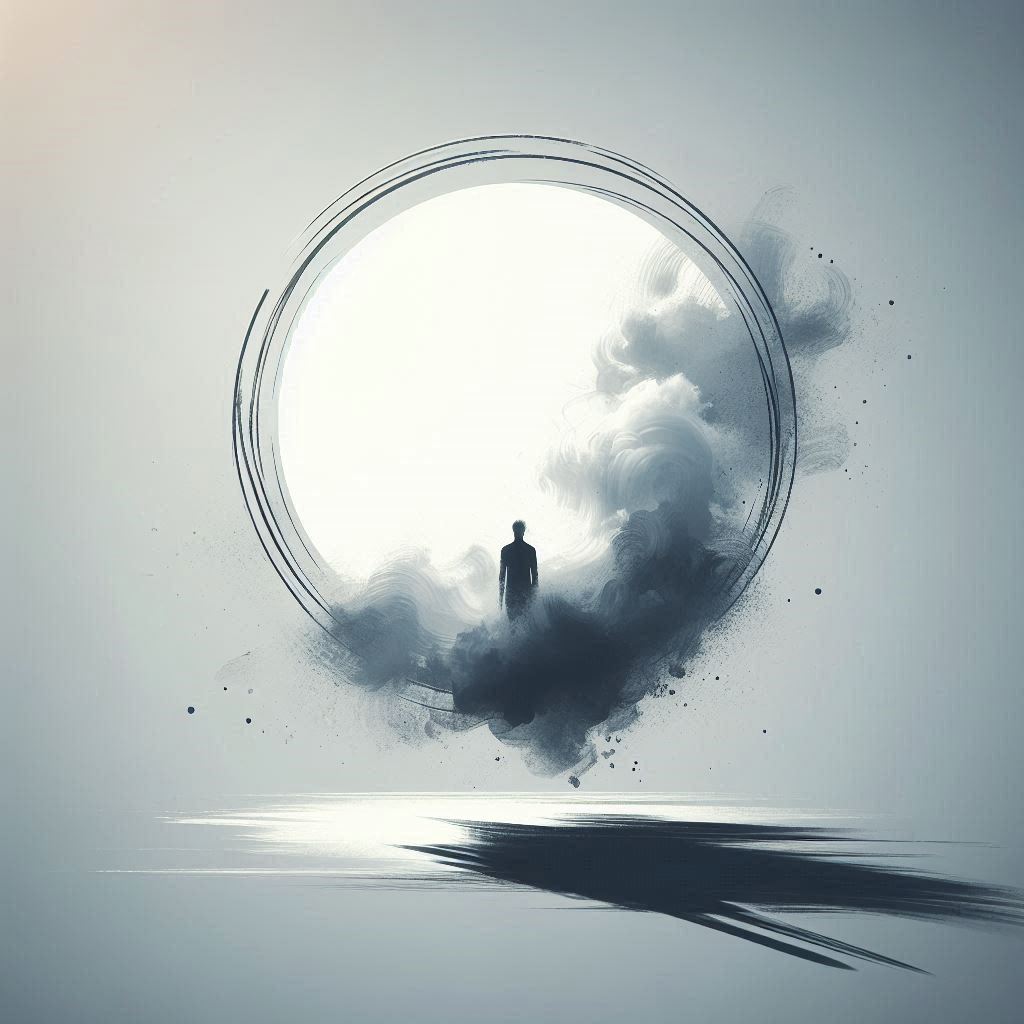
Disclaimer: Featured image generated with AI.
A quiet chamber behind the visible world.
We value your trust!
Your address is safe in the vault.
We’ll only use it to send you letters worth opening; no spells, no spam, no secret salesmen.