We are wrestling with time, memory, value, legacy, illusion, human ego, cultural decay, and existential filtering… casually.
Some people collect stamps. I collect metaphysical earthquakes. Respectfully inconvenient for me, but intellectually challenging.
Here is what I say about the time.
How Duration Reveals Value
Human beings do not merely live in time. We live under it.
Time is not just the backdrop of existence, not merely the ticking scaffolding upon which events hang like laundry. It behaves more like a patient, tireless judge, watching everything unfold without interruption, without fatigue, without persuasion. It does not intervene, does not explain, does not comfort. It simply waits. And, in waiting, it decides.
We often imagine that we evaluate our lives, our art, our achievements. We believe we determine what matters. But history suggests something more humbling: we declare importance temporarily. Time decides permanently.
This essay explores the strange authority of time as the ultimate filter of value. Not the physics of time, not the equations that stretch or bend it, but the human experience of time as a force that shifts meaning from noise, truth from illusion, substance from performance.
Time does not shout. It erases.
And in erasing, it reveals.
- The Illusion of Immediate Importance
Human perception is famously short-sighted. What feels urgent today often dissolves into triviality tomorrow. The emotional intensity of the present is a poor predictor of long-term significance.
A desire can feel like destiny while it burns. Once fulfilled, it often shrinks into an anecdote. Entire life paths are constructed around ambitions that later appear strangely hollow. The intensity was real, but the importance was not.
Time performs a peculiar alchemy on desire. It converts heat into perspective.
Consider how many cultural moments once felt decisive. Musical movements proclaimed revolutionary. Films are celebrated as definitive. Public figures are treated as permanent. In their own moment, these phenomena seem immense, even unavoidable. Yet most fade quietly into archival dust.
This is not because they were meaningless. It is because meaning is unstable in the present. The present lacks distance, and distance is the condition required for judgment.
The French philosopher Henri Bergson distinguished between measurable time and lived time. Clock time moves evenly. Experienced time stretches, compresses, exaggerates. Human judgment operates within lived time, which is emotionally distorted. Time itself, however, operates beyond this distortion. It does not feel the urgency. It does not exaggerate scale.
This difference matters. Humans evaluate from inside experience. Time evaluates from outside it.
- Cultural Survival and the Great Filter of Memory
Every era produces an overwhelming abundance of expression. Songs, stories, paintings, performances, theories. Most are celebrated briefly. Few endure.
What survives is not necessarily what was most popular, most profitable, or even most admired at the moment of creation. Survival follows a different logic.
Time acts like a vast cultural compression algorithm. It removes redundancy. It discards what is too dependent on context. It preserves what can be rediscovered without explanation.
When we say, “They made better music in the past,” we are not comparing entire eras. We are comparing our present flood with their filtered residue. We see only what endured, not the immense quantity that vanished.
The past appears superior because it has already been edited.
This phenomenon explains the persistent illusion of cultural decline. Every generation lives surrounded by unfiltered production. Every previous generation appears only through its survivors. The comparison is structurally biased.
Consider how many composers lived during the lifetime of Ludwig van Beethoven. Thousands. Yet history remembers only a few. Beethoven’s survival was not determined solely by initial reception, but by continued relevance across contexts he could not possibly have predicted.
Time does not merely preserve excellence. It preserves adaptability.
Art that survives tends to possess qualities that remain legible even when original circumstances disappear. It can be reinterpreted, repurposed, re-experienced. It continues to generate meaning after its environment has dissolved.
Everything else fades, not because it lacked value, but because its value required conditions that no longer exist.
III. Local Greatness and the Scale Problem
Human reputation is profoundly shaped by scale.
Within a limited environment, an individual may appear exceptional simply because comparison is restricted. A person can dominate a small field without approaching the upper limits of human capability. Activity can be mistaken for mastery. Visibility can be mistaken for significance.
Time, however, expands the frame.
Over decades and centuries, local distinctions merge into larger comparisons. Individuals once considered extraordinary are repositioned within broader historical contexts. Some remain remarkable. Others shrink into proportionality.
This is not cruelty. It is calibration.
A small city may celebrate a single writer, athlete, or musician as incomparable. When their work enters wider circulation, it encounters accumulated excellence from other places, other eras. The scale of judgment changes.
Time functions as a globalising force of comparison. It gathers isolated peaks into one landscape.
This process resembles scientific consolidation. In the seventeenth century, countless natural philosophers proposed explanations of motion. Over time, one framework proved unusually powerful and coherent: that of Isaac Newton. Newton did not merely succeed locally. His ideas endured repeated testing across expanding contexts.
Time does not reward activity. It rewards resilience in comparison.
- The Psychological Rewriting of the Past
Time not only judges external creations. It reshapes internal experience.
Memories are not preserved intact. They are edited, simplified, reorganised. The mind performs its own filtering process, selecting certain experiences for retention while allowing others to dissolve.
The novelist Marcel Proust explored how memory reconstructs rather than retrieves the past. What remains is not what occurred, but what proved psychologically durable.
This has profound implications for personal meaning. Events that once seemed decisive may lose emotional weight. Conversely, minor moments may grow in importance as their implications unfold.
Time reorganises significance not only historically but autobiographically.
A youthful ambition once felt like the central axis of existence. Years later, it appears as a necessary but temporary structure, like scaffolding removed after construction. The emotional intensity was real, but its structural importance was provisional.
Time reveals which experiences shaped identity and which merely occupied attention.
- Achievement and the Erosion of Desire
Human motivation is fuelled by imagined futures. Desire projects importance forward. Achievement often collapses that projection.
Once attained, many goals lose their magnetic force. What seemed transformative becomes ordinary. The emotional architecture built around the pursuit dissolves upon completion.
Time exposes the difference between intensity and necessity.
Philosophers have long recognised this pattern. Friedrich Nietzsche observed that humans often mistake momentum for meaning. The drive toward something can feel like proof of its value. But the persistence of desire is not evidence of intrinsic worth. It is evidence of psychological investment.
Time tests whether satisfaction stabilises or evaporates.
If fulfilment fades quickly, the original goal may have been structurally hollow. If satisfaction deepens, the goal possesses enduring alignment with deeper needs.
Time distinguishes between emotional combustion and structural importance.
- The Impersonality of Temporal Judgment
Time does not negotiate. It cannot be persuaded by reputation, marketing, or authority. Immediate acclaim provides no immunity against eventual disappearance.
This impersonality is unsettling because it undermines human systems of validation. Awards, rankings, and recognition operate within limited horizons. They measure attention, not endurance.
Temporal judgment operates differently. It measures persistence of relevance across changing conditions.
The theory of evolution proposed by Charles Darwin offers a useful analogy. Survival does not necessarily reflect superiority in any absolute sense. It reflects fitness relative to environment over time.
Cultural and personal significance follow a similar pattern. What persists is what remains functional, interpretable, or resonant across shifting contexts.
Time performs a kind of existential natural selection.
VII. Why Time Produces Nostalgia
Nostalgia emerges partly from this filtering process.
When we look backwards, we encounter a curated past. Only what survived remains visible. This creates the impression that earlier periods were richer, more meaningful, more refined.
In reality, they were equally cluttered with mediocrity and noise. Time simply removed most of it.
Nostalgia is therefore not only emotional longing. It is a perceptual artefact created by temporal compression.
We compare a filtered past to an unfiltered present and interpret the difference as a decline rather than a selection.
VIII. Living Under the Future’s Gaze
If time ultimately decides what matters, what does this imply for how we live now?
It suggests that immediate recognition is an unreliable measure of value. It suggests that activity is not identical with importance. It suggests that emotional intensity does not guarantee lasting meaning.
It also suggests something liberating.
If temporal judgment cannot be controlled, then striving solely for immediate validation is structurally misguided. What endures often does so unpredictably. Many creations ignored in their time later become foundational. Many celebrated achievements vanish quietly.
This uncertainty reorients effort away from applause and toward depth.
One cannot control survival across centuries. But one can cultivate qualities associated with endurance: adaptability, clarity, structural integrity, capacity for reinterpretation.
Time favours what remains usable after context collapses.
- Time as Clarifier, Not Destroyer
It is tempting to describe time primarily as an eroding force. But erosion is only half the story. Removal of excess reveals structure.
A sculptor removes stone flakes to expose form. Time removes noise to expose significance.
Without temporal filtering, meaning would be drowned in accumulation. The sheer volume of human production would render evaluation impossible. Forgetting is not merely a loss. It is a necessary condition of recognition.
Time clarifies by subtraction.
- The Paradox of Living Before Judgment
Humans exist in a peculiar position. We must act before temporal judgment occurs. We create, desire, pursue, admire, and believe without knowing what will endure.
We live inside the noise that time will later silence.
This condition produces both anxiety and possibility. Anxiety because certainty is unavailable. Possibility because significance is not predetermined.
The present is chaotic because it contains everything at once. The future will be orderly because it will contain only what survived.
Time as the Final Editor
Time does not speak, but it edits relentlessly. It reduces abundance to essence. It converts immediacy into perspective. It transforms intensity into proportion.
It judges without intention, selects without preference, and clarifies without explanation.
Human beings proclaim importance constantly. Time confirms it rarely.
Yet this silent verdict is not hostile. It is simply indifferent to illusion. It preserves what continues to matter when circumstances change, when audiences shift, when desires cool, when contexts vanish.
Everything else dissolves into background noise.
To live under time’s authority is to accept that meaning is provisional in the present but testable across duration. We do not decide what ultimately matters. We propose. Time disposes.
And in the long, quiet after the noise has faded, what remains is not what shouted loudest, but what endured longest.
Before you go, explore these related ideas:
AI Learning and Ethics: What AI Actually Does When It “Learns”
The Hysterical Truth About Truth
Off Script: Why We Question, Where Philosophy Came From, and What It Means to Think Differently
The Essential Role of Empathy in Writing: Why It’s the Most Important Skill for an Author
The Convenient Myth of Emotional Reflection
If these words stayed with you, share them.
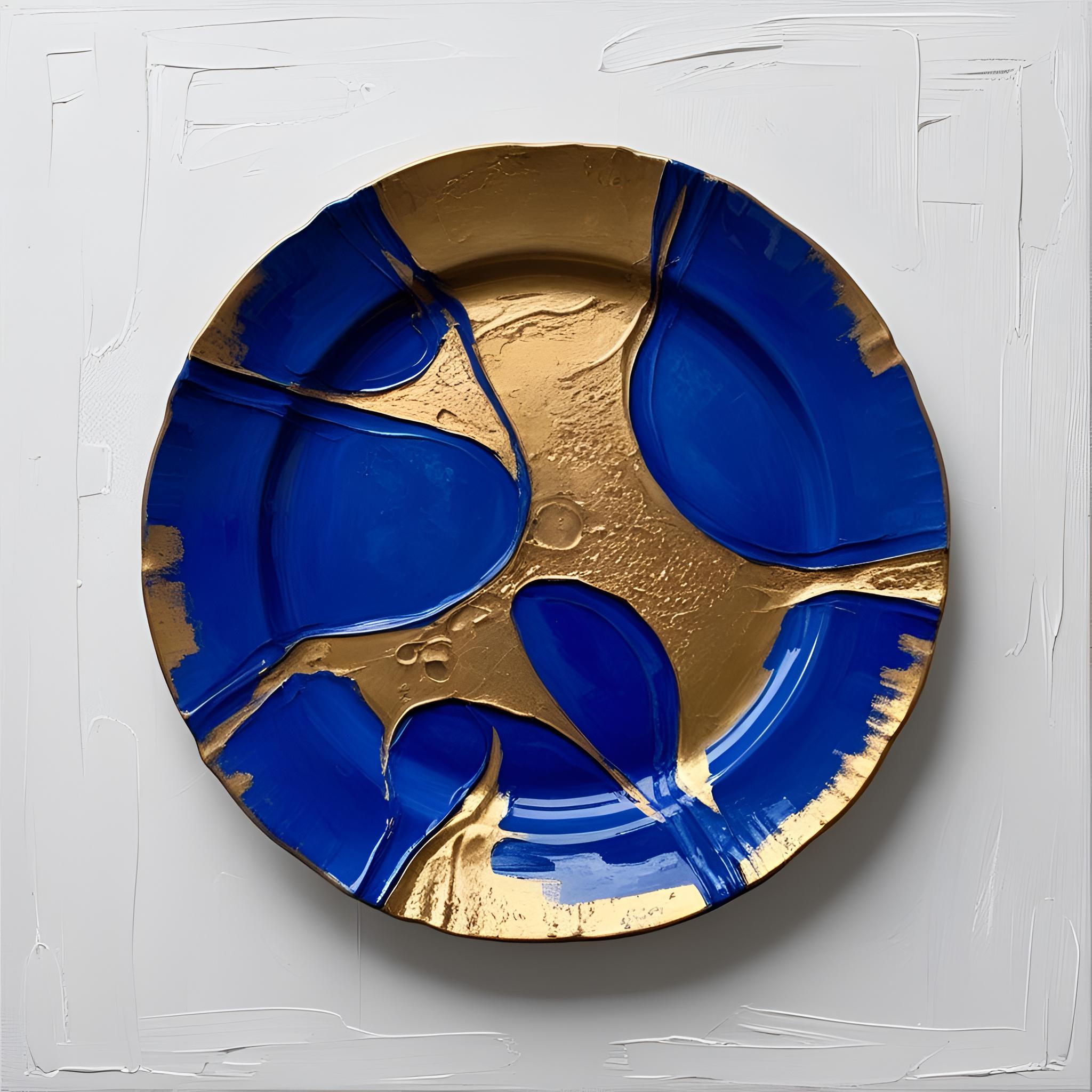
Disclaimer: Featured image generated with AI.
A quiet chamber behind the visible world.
We value your trust!
Your address is safe in the vault.
We’ll only use it to send you letters worth opening; no spells, no spam, no secret salesmen.