Writer’s block is marketed like a disease with a personality. Moody. Elusive. Feminine, usually. Something that “visits” writers, as if the blank page slips through an open window at night, perches on the desk, and whispers: not today.
This framing is comforting. It absolves us. If the block is external, then we are innocent. Victims of weather. Of fate. Of Mercury in retrograde. We can light a candle, drink a tea with an unpronounceable name, consult a prompt generator, or ask an AI to give us “ten ideas that will unlock my creativity.” We want metaphysical escapes from the blank page. Rituals. Spells. A sense that writing is something that happens to us rather than something we do.
Real solutions are boring. They don’t shimmer. They don’t feel like revelation. They don’t fit into reels or workshops titled Unblock Your Inner Artist in 7 Minutes. Real solutions sound like this: sit down, lower your standards, and write badly on purpose. No one wants that. It doesn’t flatter the ego. It doesn’t preserve the myth.
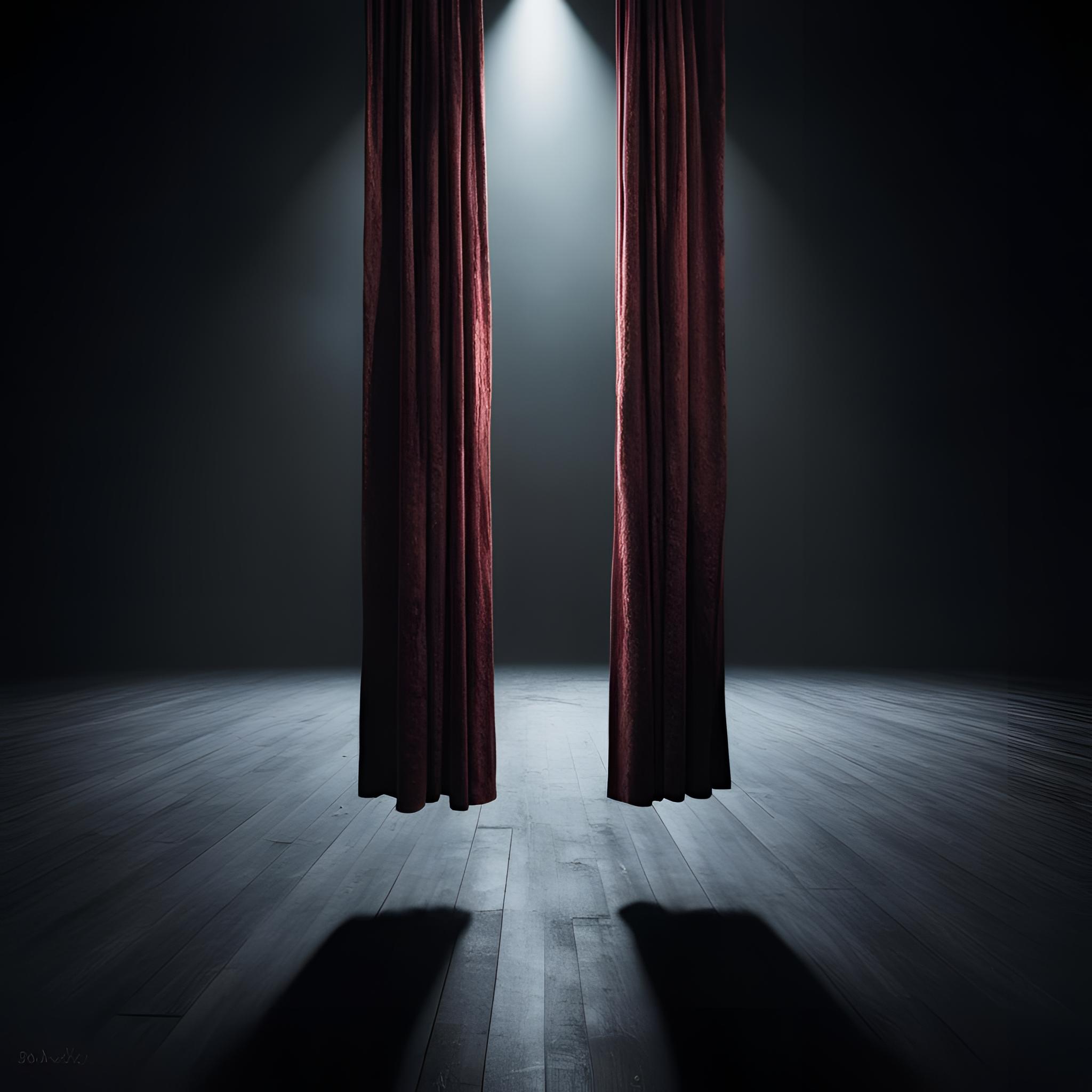
So instead, we circle the block like it’s sacred. We interrogate it. We ask what it’s trying to teach us. We turn it into a personality quiz. We talk about fear, perfectionism, trauma, the wounded inner child. All of which can be true, by the way. But truth is often used here as a velvet curtain. Something plush to hide behind so we don’t have to confront the simpler, uglier possibility: we don’t want to write this thing badly, and we don’t want to discover that badly might be the only way through.
Writer’s block is rarely about not knowing what to write. Most writers know exactly what they want to write. That’s the problem. The imagined version is luminous. The sentences arrive already perfected in the head, polished, meaningful, devastating in their beauty. Then the hands touch the keyboard, and what comes out looks like a cheap photocopy of the idea. Flatter. Smaller. Embarrassing. The gap between vision and execution yawns open, and rather than step into it, we step back and call it a block.
In that sense, writer’s block is a grief response. You are mourning the loss of the perfect version before it has even lived. And grief loves ceremony. It loves language. It loves excuses that feel noble.
Enter prompts.
Prompts are fascinating because they promise motion without commitment. They are a sidestep. A way of writing without writing the thing. They feel productive. You can collect them. Save them. Categorize them. There is an entire economy built on giving writers permission to avoid their own work while still feeling like writers. “Just warm up,” we say, as if we are athletes stretching before the real event. Some people have been warming up for ten years.
I’m not anti-prompt. Prompts can be playful. They can loosen the joints. They can remind you that language is elastic. But they are often used the way incense is used in rooms that need to be cleaned. To perfume avoidance. To create the sensation of progress without the discomfort of direction.
What people actually want is not a prompt. They want absolution. They want someone or something to say: it’s not your fault. You’re blocked because you’re deep. Because you care. Because you’re waiting for alignment. Because your creativity needs to be courted, not commanded.
This is where AI has slipped into the room like a very polite ghost.
AI is an incredible tool. I use it. I enjoy it. I also find it faintly tragic how quickly it has become a substitute therapist for creativity. People don’t ask it how to write. They ask it why they can’t. They ask it to reassure them, to reflect their feelings back with kind language and gentle frameworks. They ask it to be the voice that says: you are still a writer, even if you didn’t write today.
And listen, that reassurance has value. The world is cruel enough. But there’s something quietly bleak about outsourcing courage. About asking a machine to hold your hand while you avoid the page. The AI becomes the compassionate witness while the work remains untouched, untroubled, pristine in its unwritten state.
There is also something seductive about AI-generated ideas. They arrive fully formed, plausible, clean. They don’t resist you. They don’t humiliate you by sounding worse than what you imagined. They create the illusion that the problem was a lack of input, not a resistance to output. And for a moment, it works. You feel inspired. You feel capable again. You screenshot the ideas. You tell yourself you’ll start tomorrow.
Tomorrow, of course, the block has returned. Because the block was never about ideas. It was about authorship.
Writing is one of the few arts where the maker is fully visible in the mess. A bad painting can be reframed as abstract. A wrong note can be drowned in volume. But a bad sentence sits there naked, unmistakably yours. There is no filter thick enough to hide the fact that you chose those words in that order. Writer’s block is often the refusal to be seen at that stage. To be witnessed mid-failure.
So we search for cures that let us skip the exposure. We want the page to meet us halfway. We want flow without friction. We want the trance state, the mythic channeling, the moment where it all pours out effortlessly and we get to feel chosen rather than responsible.
The ugly truth is that most writing is not trance. It is negotiation. You sit down and argue with yourself. You type sentences you don’t like and keep them anyway. You move forward not because you are inspired but because stopping would require even more energy. Momentum is built, not received.
There are practical cures for writer’s block, and none of them are mystical. They are mildly offensive in their simplicity.
Lower the stakes. Decide that what you are writing is not important. Lie to yourself if you have to. Importance is paralyzing. Nothing wants to be born under the weight of destiny.
Constrain the time. Infinite time breeds infinite avoidance. Fifteen minutes is honest. An hour is negotiable. A day is a threat.
Write the wrong version. Not a draft. A sabotage. Write it in the worst voice possible. Make it melodramatic. Make it obvious. Make it dull. The wrong version breaks the spell of reverence around the idea.
Stop stopping. Most blocks happen mid-sentence, not at the beginning. Writers stop because they sense a sentence going wrong. They pause to fix it. That pause is where doubt slips in and sets up furniture. Keep going. Fixing is a different job.
Accept that boredom is part of the process. Not every session will feel meaningful. Some will feel like office work. That does not make them invalid. It makes them real.
None of this feels like magic. That’s the problem. There is no aesthetic pleasure in being told that discipline matters more than mood. There is no romance in admitting that fear of mediocrity has more power over you than lack of talent.
And yet.
There is something quietly radical about showing up anyway. About refusing the metaphysical escape hatch. About saying: I don’t need a sign, a prompt, or a personality diagnosis for my block. I need to put words down and survive their imperfection.
AI can help with craft. It can reflect patterns. It can generate friction when you are stuck in a loop. But when it becomes the place you go to feel like a writer instead of doing the work of being one, it turns into a very soft trap. Comfortable. Affirming. Padded. Nothing grows teeth there.
I love the tool. I also see how quickly it can become a mirror you talk to instead of a door you walk through.
Writer’s block doesn’t need curing so much as demystifying. It is not a curse. It is not a sign. It is not your subconscious sending coded messages. It is usually a moment where your taste has outpaced your tolerance for failure.
The cure is not kinder thoughts. It is sturdier habits.
Write badly. Write tired. Write while unimpressed with yourself. Write when the sentences don’t glow. Especially then.
The blank page is not asking for reverence. It is asking for marks. Any marks. Once they’re there, the conversation can begin.
Remember, the blank page is not your therapist and writer’s block is not a spiritual condition!
You might want to read more:
Let’s Write Liminal, Dreamlike Fiction
Rethinking Authorship in the Age of Technology
The Psychology of Character Desire
How to Write Emotionally Intense Fiction
The Bestseller Illusion: Why Great Writing Doesn’t Always Win
Subscribe
The Inner Orbit
We value your trust!
Your address is safe in the vault.
We’ll only use it to send you letters worth opening; no spells, no spam, no secret salesmen.